
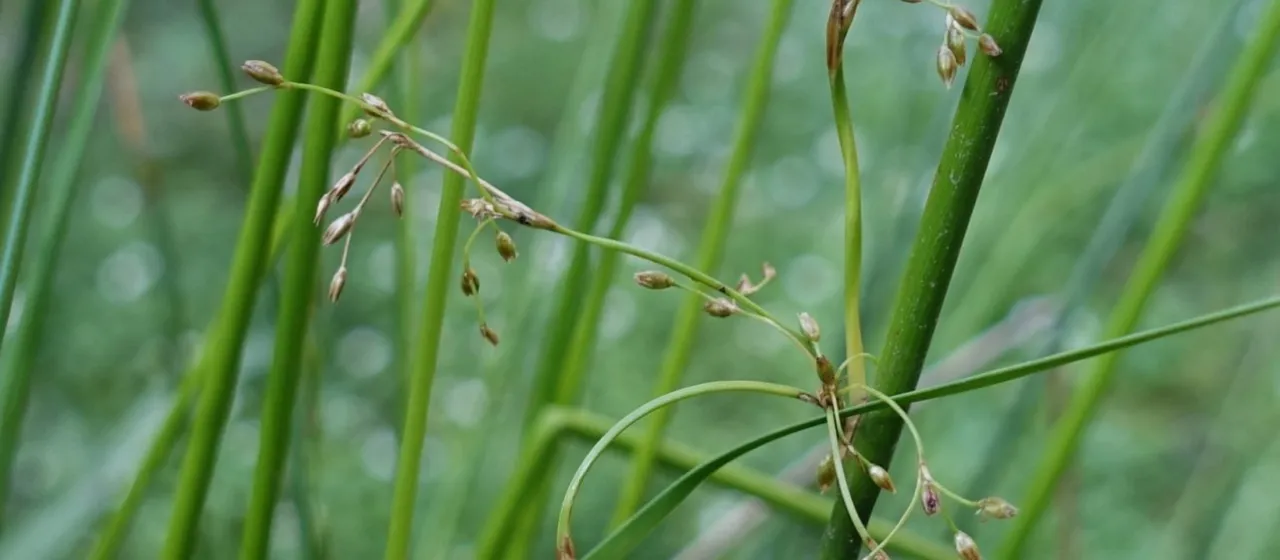
Description
Few-flowered rush (lat. Juncus pauciflorus) is a perennial herbaceous plant belonging to the Juncaceae family. This species is highly adapted to wetland environments, thriving in saturated soil conditions where it forms dense, clumped structures that provide stability to the surrounding substrate.
The plant originates from the regions of Australia and New Zealand, where it is commonly found in riparian habitats and marshy landscapes. Its distribution is closely linked to its specific ecological requirement for constant water availability, making it a key species in maintaining the integrity of local aquatic ecosystems.
Botanically, it is characterized by slender, erect, cylindrical stems that lack traditional foliage, relying on basal sheaths for structural support. The inflorescence consists of a small, terminal cluster of flowers. This minimalist approach to plant architecture allows it to resist wind and water current stress in its native environment.
Regarding cultivation, this species requires specific soil and climate conditions. It thrives in heavy, poorly drained, or waterlogged soils. In an agricultural or horticultural setting, maintaining a constant water level is essential for survival, as drought stress is fatal to this species within a short timeframe.
- Requirement for saturated soil conditions.
- High tolerance for low-nutrient substrates.
- Sensitivity to high salinity levels.
- Essential role in erosion control for banks.
The primary agricultural and environmental use of Juncus pauciflorus is in phytoremediation, particularly for nutrient runoff management in agricultural watersheds. By stabilizing banks and filtering water, it improves overall ecosystem health. Common plant health issues include fungal root rots caused by stagnant water conditions and pest pressures from marsh-dwelling insects that feed on the soft stem tissues.