
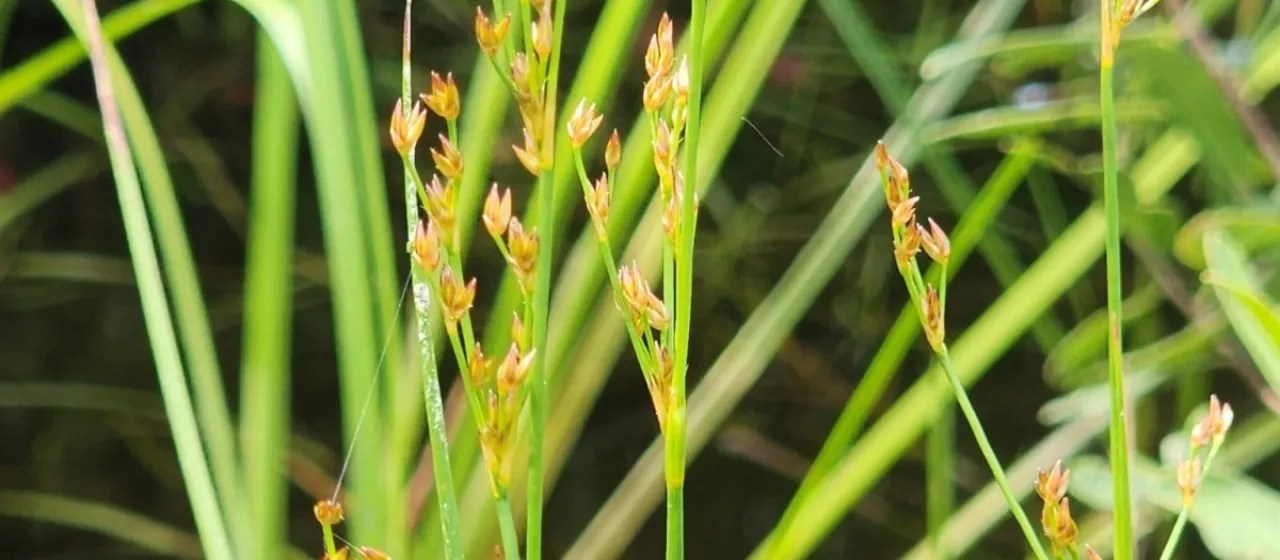
Description
The brown-fruited rush (Juncus pelocarpus) is a perennial herbaceous plant belonging to the Juncaceae family. It is a specialized hydrophyte, typically found in wet habitats such as marshes, pond margins, and sandy lakeshores. While not a conventional crop for large-scale agriculture, it is recognized for its utility in ecological restoration and soil management.
The species is native to North America, where it thrives across various humid environments. Its natural range demonstrates its adaptability to changing water levels and varying temperatures within the temperate zone. In agricultural practice, it is often utilized in projects aimed at stabilizing riparian buffers and managed wetlands.
From a botanical perspective, the plant is characterized by its slender, often hair-like leaves and a height ranging from 10 to 40 centimeters. An interesting biological feature is its ability to produce small vegetative buds (gemmae) on the stems, which act as a secondary means of propagation alongside seed dispersal. This adaptation ensures the plant can quickly colonize suitable disturbed sites.
Agrotechnical requirements center on consistent moisture availability. The plant prefers acidic, nutrient-poor, yet waterlogged substrates. It thrives best in full sun, and successful cultivation relies on maintaining stable soil saturation levels throughout the growing season, which prevents competition from more aggressive terrestrial weeds.
The economic and practical usage of Juncus pelocarpus is primarily focused on environmental services:
- Strengthening soil structure in erosion-prone areas.
- Phytoremediation and natural water purification in drainage systems.
- Enhancement of local biodiversity in managed aquatic zones.
- Providing shelter for microfauna in wetland agro-ecosystems.
Regarding health management, the brown-fruited rush is generally resilient to pests and diseases due to its specialized habitat requirements. Major challenges include susceptibility to fungal issues caused by stagnant water or pollution. Sustainable management involves maintaining good water circulation and avoiding nutrient overload, which can negatively affect the balance of the plant population.