
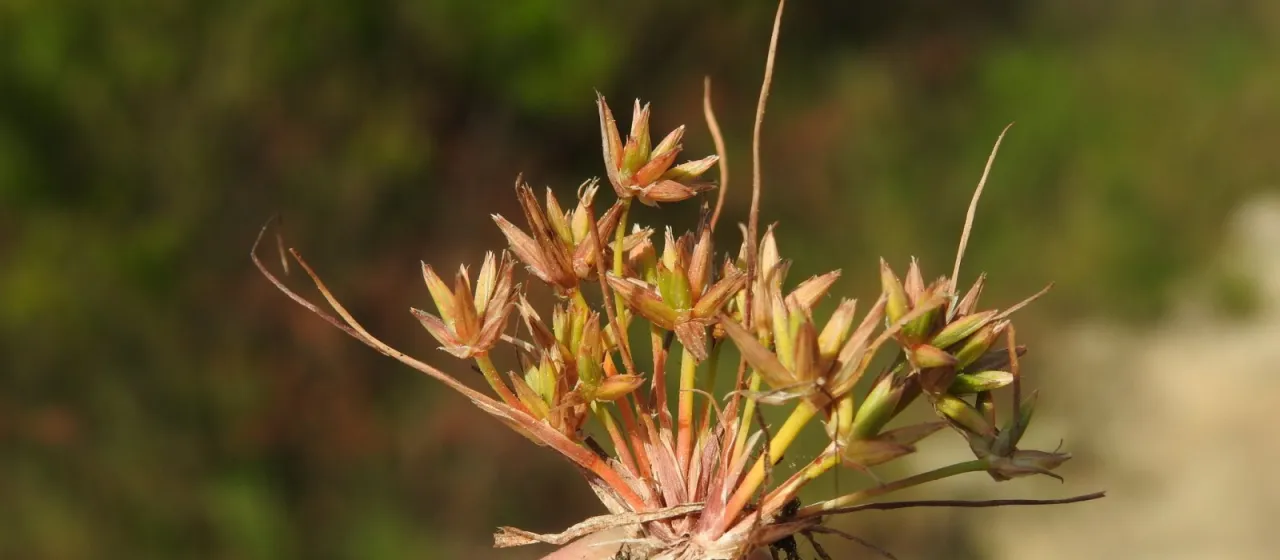
Description
The pygmy rush (Juncus pygmaeus) is a specialized herbaceous plant belonging to the Juncaceae family. Unlike large-scale agricultural crops, this species is categorized as a niche plant, primarily valued for its compact size and unique adaptation to moist environments. Its distinct morphology makes it a subject of interest for both botanical research and professional landscape design involving aquatic habitats.
This species is native to regions within Western Europe and the Mediterranean, where it typically inhabits wetlands, muddy banks, and periodically flooded meadows. Its natural distribution is tied to specific ecological niches where water saturation levels are consistently high. These environmental conditions are crucial for the plant's survival and must be replicated to ensure successful growth in horticultural settings.
Botanically, Juncus pygmaeus is characterized by a diminutive habit, rarely exceeding a few centimeters in height. It features narrow, grass-like leaves forming a basal rosette and small, condensed inflorescences. Its root system is finely branched and well-adapted to anaerobic soil conditions often found in saturated habitats, allowing the plant to remain stable and effectively absorb nutrients in wet environments.
The cultivation requirements are centered around moisture management. The plant demands a consistently moist to waterlogged substrate and thrives in full sun. While it does not require complex fertilization, it is highly sensitive to competition from taller weeds. Maintaining the appropriate microclimate is the primary challenge in agrotechnics; drainage should be avoided in the immediate root zone to prevent desiccation.
- Essential need for high soil moisture levels.
- Preference for full sun and open areas.
- Sensitivity to competition from larger plant species.
- Adaptability to periodically submerged soils.
The primary horticultural use of the pygmy rush is in the design of water gardens, pond edges, and bio-filtration areas where a small-scale, moisture-tolerant ground cover is desired. Regarding plant health, the species is susceptible to fungal infections if stagnant water becomes contaminated or if airflow is poor. Pest issues are generally minimal, although small insect herbivores may occasionally impact the foliage under stressed conditions.