
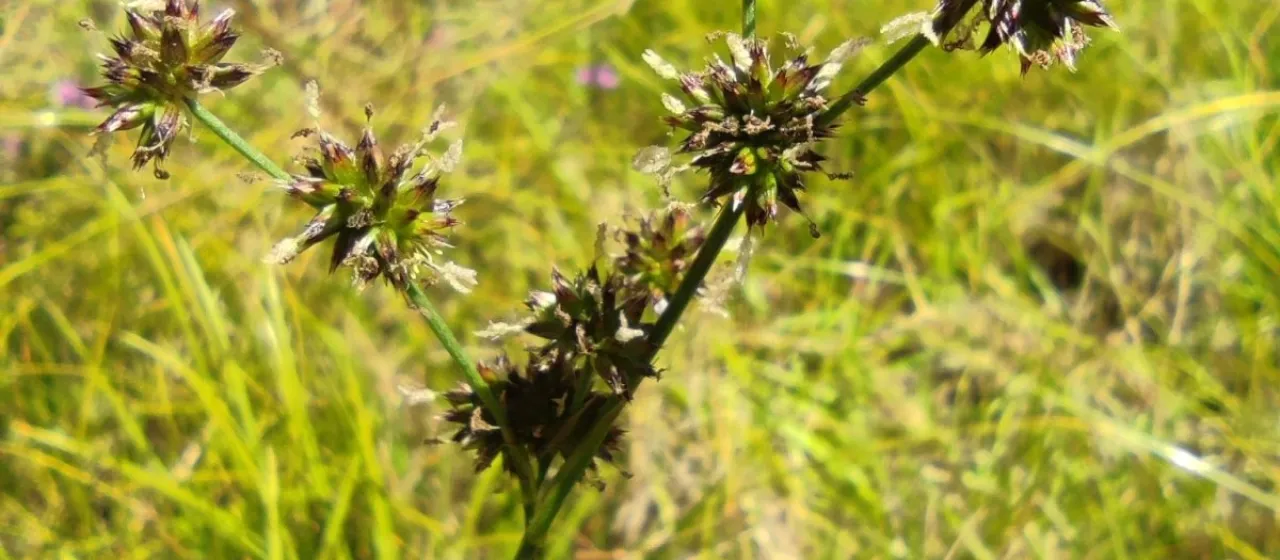
Description
Striated rush (Latin: Juncus striatus) is a perennial herbaceous plant belonging to the Juncaceae family. It is a highly moisture-dependent species, naturally occurring in temperate and subtropical regions, typically inhabiting wet meadows, marshlands, and the fringes of freshwater bodies where the soil remains consistently saturated.
Botanically, the plant is distinguished by its erect, longitudinally striated stems, which serve as its primary photosynthetic organs. The foliage is generally reduced, with leaves often being narrow or cylindrical. The plant features a robust rhizomatous root system, which allows it to thrive in soft, organic-rich substrates and effectively anchor itself against moving water or wind.
Regarding cultivation requirements, Juncus striatus demands high levels of soil moisture and prefers neutral to slightly acidic soils rich in silt or clay. While it exhibits strong tolerance for waterlogged conditions, it is sensitive to prolonged drought, which can significantly stunt its growth. Optimal light exposure is also crucial for maintaining the plant's vigor and structural integrity.
The agricultural and environmental use of the striated rush is diverse. It is widely valued in bioengineering for its role in riverbank stabilization and phytoremediation of contaminated water. Additionally, it is a popular choice in ornamental horticulture for creating naturalistic riparian landscapes. While not a primary forage crop, it may serve as supplemental grazing material in specific pastoral systems.
Common challenges and management issues include:
- Potential fungal infections during periods of poor air circulation and cold weather.
- Infestations by aphids or specialized stem-boring insects that can damage the plant's vitality.
- Invasive weed encroachment during the establishment phase, which necessitates regular manual or mechanical weeding.
Effective management involves monitoring water levels to ensure the substrate does not dry out while simultaneously preventing stagnant conditions that might promote pathogens. Regular thinning of the biomass helps keep the plant population healthy and encourages new growth, ensuring the longevity and productivity of the site throughout the growing season.