
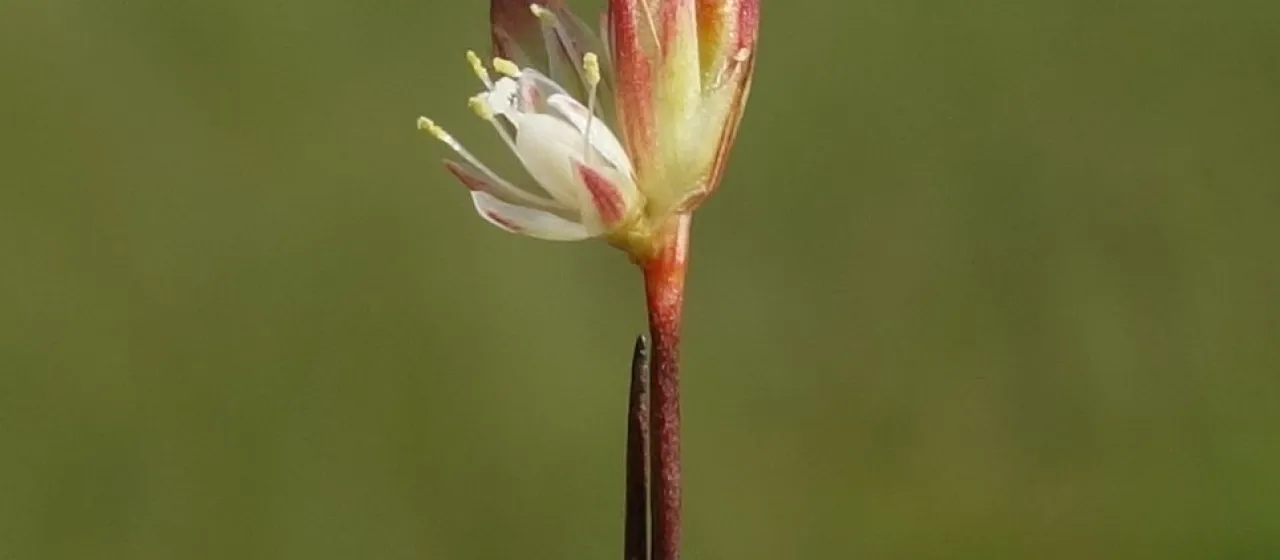
Description
Moor rush (Juncus stygius) is a rare perennial herbaceous plant belonging to the Juncaceae family. While it is not classified as a conventional agricultural crop, it is a vital species in the field of bog ecology and conservation. It serves as a specialized plant that thrives in nutrient-poor environments, contributing to the biodiversity of peatland ecosystems.
The plant has a circumboreal distribution, found primarily in the northern regions of Eurasia and North America. Its natural habitat includes pristine sphagnum bogs, fens, and the margins of oligotrophic lakes. It is highly localized, as it cannot survive in regions with altered water tables or those impacted by agricultural runoff and nutrient enrichment.
Botanically, Juncus stygius is characterized by its slender, erect stems growing from 10 to 30 centimeters in height. The leaves are grass-like and often basal, while the inflorescence consists of small clusters of flowers located at the apex of the stem. The plant reproduces primarily via seeds, which are adapted for dispersal in aquatic environments, allowing the species to colonize suitable boggy patches over time.
Cultivation requirements for moor rush are extremely stringent, making it difficult to maintain outside of its natural habitat. It requires acidic peat soils with a very low concentration of nutrients and high water levels year-round. It is intolerant of shade and requires full sun exposure to thrive. In an experimental or restoration context, maintaining the exact hydrology and water chemistry is the single most important factor for successful plant survival.
The main use of moor rush is related to its role in nature conservation and environmental education. It is not cultivated for food or industrial fiber due to its slow growth and protected status.
- Essential for restoring damaged peatland ecosystems.
- Valued as an indicator species for wetland health.
- Used by botanical research centers to study adaptation to waterlogged soils.