
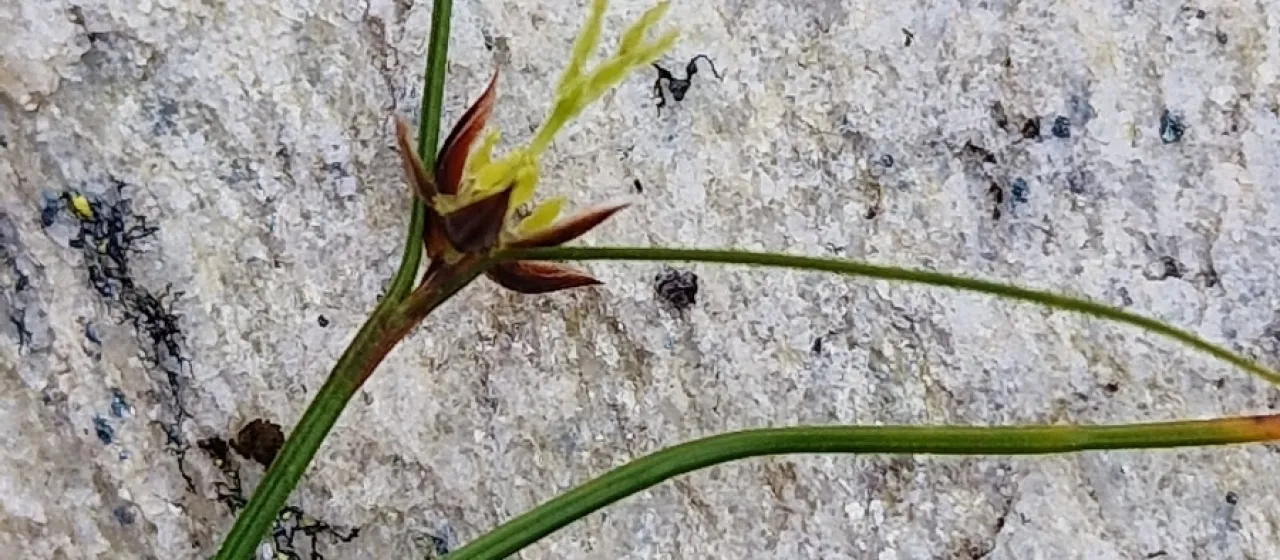
Description
The three-leaved rush (latin Juncus trifidus) is a perennial herbaceous plant belonging to the Juncaceae family. While not a primary agricultural crop, it is a significant species in ecological restoration and alpine-themed ornamental horticulture. Its unique growth habit and extreme hardiness make it a specialized object for botanical interest and garden design.
The origin of the species is linked to the arctic and alpine regions of the Northern Hemisphere. It thrives in harsh environments, including rocky screes, mountain ridges, and subarctic tundras. Due to its evolutionary history, the plant has developed a remarkable ability to survive in nutrient-poor and high-altitude conditions where most other plants would fail.
Botanically, it forms dense tufts composed of tough, wiry leaves. The identifying feature is the presence of three specialized leafy bracts at the top of the stem, which look like a continuation of the stalk. The root system is fibrous and resilient, designed to anchor the plant firmly in rocky substrates or thin mountain soils, preventing soil erosion.
Cultivation requirements focus on mimicking the plant's natural habitat. It necessitates a well-draining, acidic substrate and full sun exposure. Unlike some other members of the Juncus genus, it does not tolerate waterlogged soil, preferring a constant but moderate level of ambient humidity instead. Fertilization is generally unnecessary, as the plant is adapted to soils with very low nutrient levels.
Economically, the three-leaved rush is mainly valued as a decorative element in rock gardens and alpine rockeries, adding natural texture to landscapes. It is relatively free of major pests and diseases in its native range. In nursery settings, potential issues arise mainly from improper soil moisture management, which may lead to fungal root rot, so proper drainage remains the most critical factor for its successful growth.