
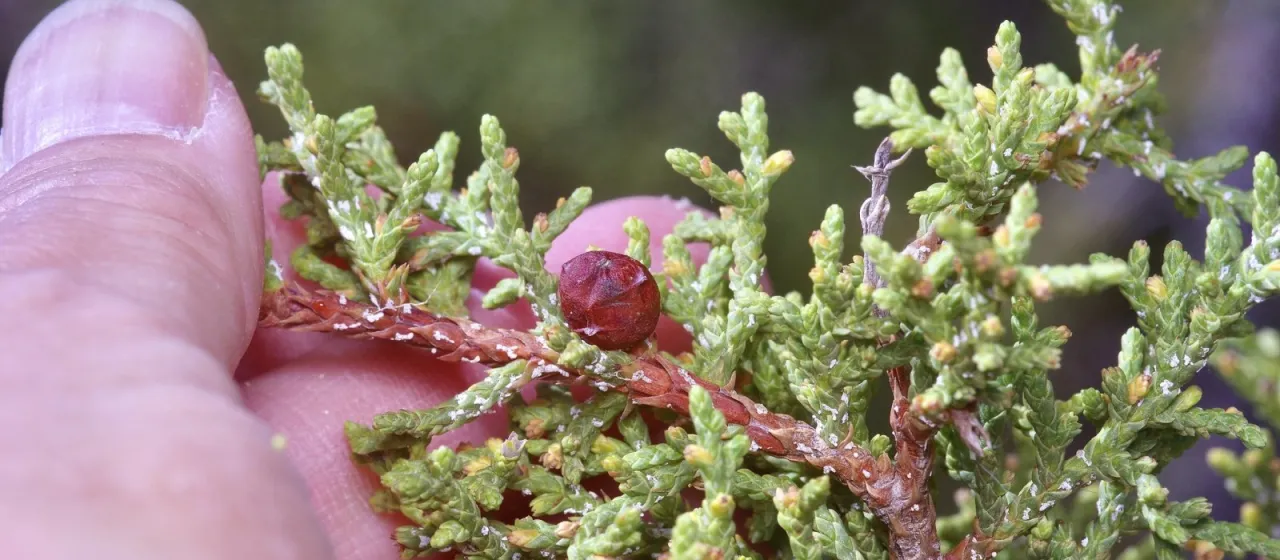
Description
Red-fruited juniper (Juniperus erythrocarpa) is a perennial evergreen plant belonging to the Cupressaceae family. It is a distinct species recognized for its unique reddish-colored berries, which sets it apart from the typical blue or black-berried juniper species. As an agricultural and botanical subject, it is valued for its hardiness and ornamental characteristics.
The native range of this species is centered in the arid mountainous regions of Mexico. It naturally thrives in rugged terrains, rocky slopes, and semi-arid environments where it has evolved to withstand long periods of drought and high solar radiation. Its evolutionary history has made it a robust plant capable of thriving in nutrient-poor substrates.
Botanically, the plant is characterized by a slow growth rate and a dense, often gnarled habit. Its foliage consists of tightly pressed scale-like leaves that are dark green in color. The most striking feature is the development of the fleshy cones, which transition to a reddish-brown shade at maturity. The root system is deep and expansive, providing stability and access to water in harsh environments.
Agricultural requirements focus on replicating its natural habitat conditions. Good drainage is the most critical factor for success; the species will not survive in heavy, waterlogged soils. It requires full sun to maintain its structure and coloration. Fertilization should be kept to a minimum, as the plant is adapted to low-nutrient environments, and over-fertilizing can lead to weak, rapid growth that is susceptible to pests.
Host-plant use is primarily focused on landscape architecture and specialized ornamental nurseries. It is an excellent choice for xeriscaping projects where water conservation is a priority. Additionally, because of its unique appearance, it is a sought-after specimen for collectors of rare conifers and arid-land restoration projects that aim to restore native plant diversity.
- Light requirement: full sun exposure.
- Soil type: well-drained, sandy, or rocky soil preferred.
- Drought tolerance: high, once established.
- Common pests: spider mites in hot, dry conditions.
- Disease risk: root rot caused by poor soil drainage.