
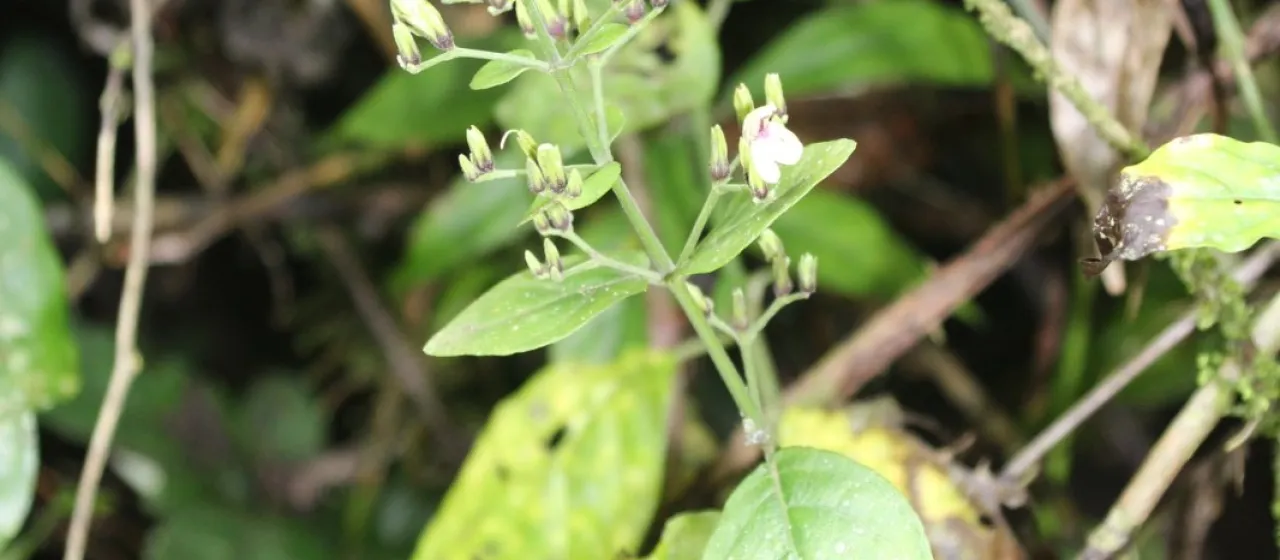
Description
Justicia extensa is a perennial herbaceous plant belonging to the Acanthaceae family. This species is recognized for its unique structural characteristics and adaptation to specific tropical environments, making it a subject of interest in both botanical studies and specialized horticulture.
The plant originates from tropical regions of Africa, where it thrives in warm and humid conditions. Because of its tropical nature, the cultivation of Justicia extensa outside its natural range requires controlled environments such as greenhouses or conservatories to mimic the specific temperature and humidity levels essential for its survival.
Botanically, the plant is characterized by its extended shoot development and specific leaf morphology. The inflorescences are typical for the genus, often appearing at the terminals of the branches. The foliage is generally dense, providing a lush appearance that is highly sought after in decorative plant collections.
Regarding agricultural requirements, the soil must be well-drained and nutrient-rich to prevent root rot, which is a common issue in overwatered tropical species. The plant performs best in light conditions that offer high brightness but avoid the scorching effects of direct midday sun. Regular monitoring for moisture levels is crucial for optimal growth rates.
The primary use of this crop is within the ornamental and botanical nursery sectors. Justicia extensa serves as an aesthetic asset for indoor landscaping and specialized collections. Its resistance to minor environmental fluctuations, combined with proper maintenance, allows for high-quality production in controlled environments.
- Requires consistent temperatures ranging from 20 to 28 degrees Celsius.
- Susceptible to standard greenhouse pests such as aphids and spider mites.
- Benefits from systematic pruning to maintain desired size and density.