
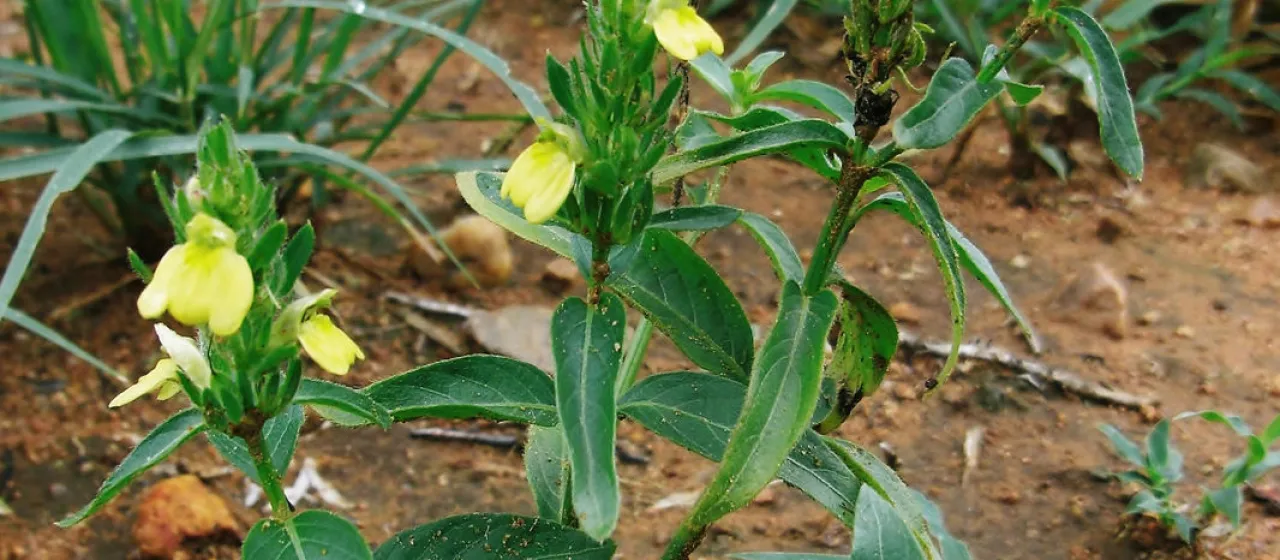
Description
Yellow Justicia (Justicia flava) is a perennial herbaceous plant belonging to the Acanthaceae family. Recognized for its structural resilience and potential biochemical profile, this crop is of growing interest in tropical agronomy, where it is cultivated for both its ornamental properties and its application in local medicinal practices.
The species is native to the tropical regions of Africa, where it thrives in varied habitats ranging from savannahs to open woodlands. Its range of cultivation is strictly tied to tropical and subtropical climates, as the plant requires consistent warmth to maintain optimal vegetative growth and reproductive maturity throughout the year.
Botanically, Justicia flava displays erect, branched stems covered in lanceolate, opposite leaves. Its most distinctive feature is the dense, yellow, spike-like inflorescence. The plant's root system is robust, allowing it to adapt to various soil types, although it performs best in well-structured environments that allow for healthy gas exchange.
Agronomic requirements for this crop include access to fertile, well-draining soils with a neutral pH profile. The plant demands a high-light environment but benefits from protection against direct scorching sun during peak hours. Water management is critical; while it displays moderate drought tolerance, uniform moisture levels are necessary to maximize biomass yields.
- Propagating via seeds or stem cuttings during the early growing season.
- Ensuring proper row spacing to promote air circulation and prevent fungal infections.
- Applying organic mulches to regulate soil temperature and retain moisture.
- Monitoring for common pests like spider mites and aphids in greenhouse or field setups.
The economic utility of Yellow Justicia is primarily centered on its secondary metabolites, which are currently being studied for potential therapeutic applications. Beyond its pharmacological potential, it serves as a valuable component in ecological restoration and soil stabilization projects within its native range. Crop protection strategies primarily focus on managing soil-borne pathogens and moisture-related diseases.