
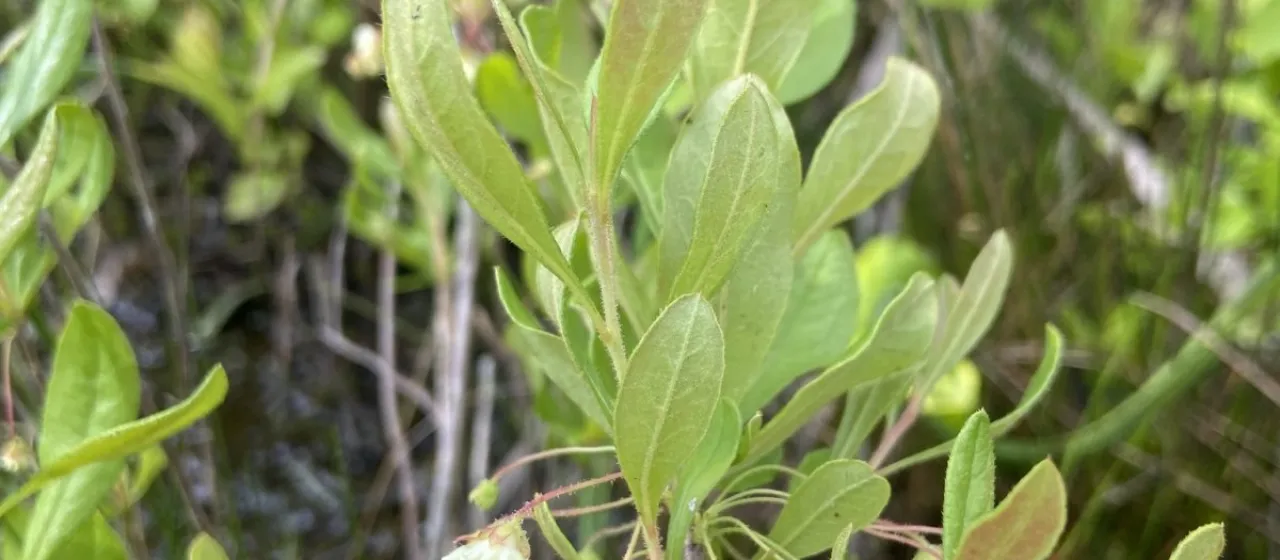
Description
Kalmia cuneata, commonly known as white wicky, is a deciduous shrub that belongs to the Ericaceae family. Unlike the more common evergreen species within the genus, this specific plant exhibits deciduous characteristics, which provides a unique aesthetic shift through the seasons for those cultivating it in specialized gardens.
The native range of Kalmia cuneata is strictly confined to small, specific regions in North and South Carolina in the United States. It naturally thrives in wetland areas, near stream banks, and in boggy forests. These origins highlight the plant's dependency on high soil moisture and a consistently acidic, nutrient-rich environment to survive and reproduce effectively.
Botanically, the plant grows as an upright shrub reaching up to 1.5 meters in height. The foliage is characteristically wedge-shaped (cuneate), giving the species its scientific name. During its flowering season, it produces beautiful, saucer-shaped white flowers with distinctive purple markings on the inner petals, creating a visually striking display against the greenery.
Agricultural and horticultural requirements for this species are demanding. It requires partial shade to protect it from harsh midday sun and must be planted in soil with a very low pH level. Organic matter such as pine bark or peat moss should be incorporated into the planting medium to ensure adequate drainage while retaining necessary moisture. Any increase in soil alkalinity will lead to chlorosis and potential plant death.
Regarding health and maintenance, Kalmia cuneata is susceptible to common Ericaceae pests and diseases, such as leaf spot fungi and root rot, particularly if the drainage is poor. To ensure long-term health, growers should practice strict watering schedules to avoid root suffocation and monitor the foliage for early signs of infection. It remains a prized specimen for collectors and botanical garden displays rather than a large-scale agricultural crop.