
Description
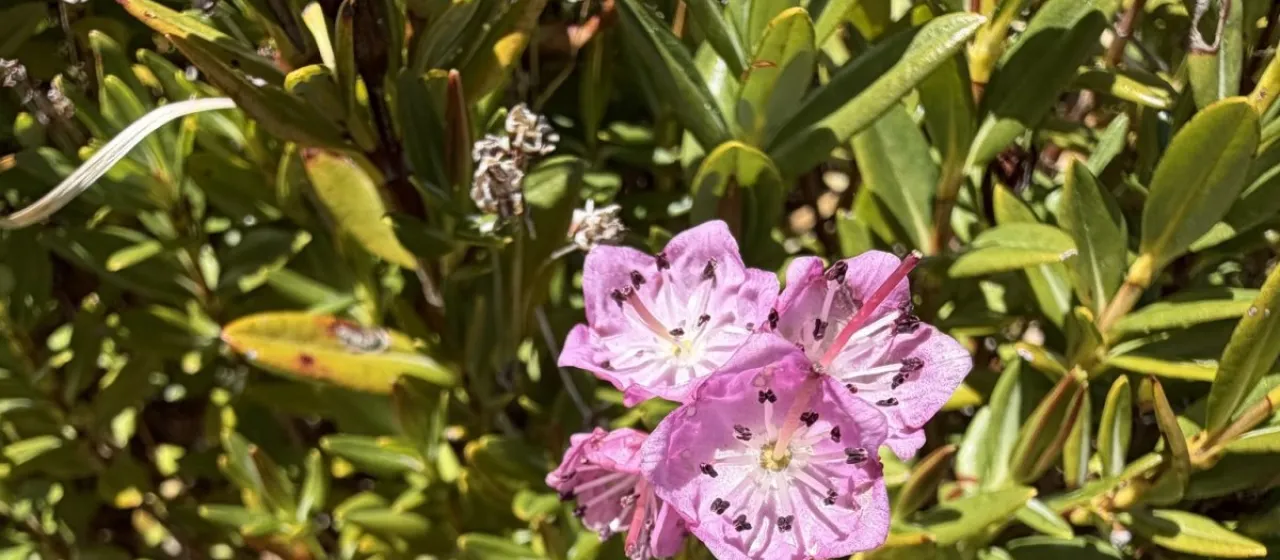
Western bog laurel (Kalmia microphylla) is a charming evergreen shrub belonging to the Ericaceae family. Known for its small, dense foliage and delicate, cup-shaped flowers, this plant is a staple for gardeners who appreciate slow-growing, ornamental species that thrive in specific environmental niches.
The species is native to western North America, typically found in high-altitude meadows, bogs, and moist alpine areas. Because of its native environment, it is highly cold-hardy, although it requires specific conditions to simulate its natural habitat, such as consistent moisture and cool air temperatures throughout the growing season.
Botanically, Kalmia microphylla is characterized by its small, opposite, elliptical leaves that remain deep green year-round. The plant blooms in late spring or early summer, producing clusters of pink to purplish flowers. The root system is quite fine and shallow, making it sensitive to soil compaction and aggressive cultivation practices near the base of the plant.
Successful cultivation requires soil with a low pH, typically between 4.5 and 5.5. The ideal substrate is a mix of peat moss, pine bark, and sand, ensuring excellent drainage while retaining enough moisture to prevent the plant from drying out. It performs best in partial shade, as intense afternoon sunlight can scorch the leaves and dry out the shallow roots.
The primary use for Western bog laurel is in decorative landscaping, particularly in rock gardens, peat beds, or ericaceous borders alongside rhododendrons and heathers. It is generally resistant to most pests but can be prone to fungal leaf spots if airflow is poor. Maintenance consists mainly of maintaining soil acidity and providing organic mulch to keep the roots cool.
- Requires acidic soil conditions.
- Sensitive to high calcium levels in water.
- Avoid heavy pruning to preserve the natural shape.
- Mulch heavily to maintain soil moisture.