
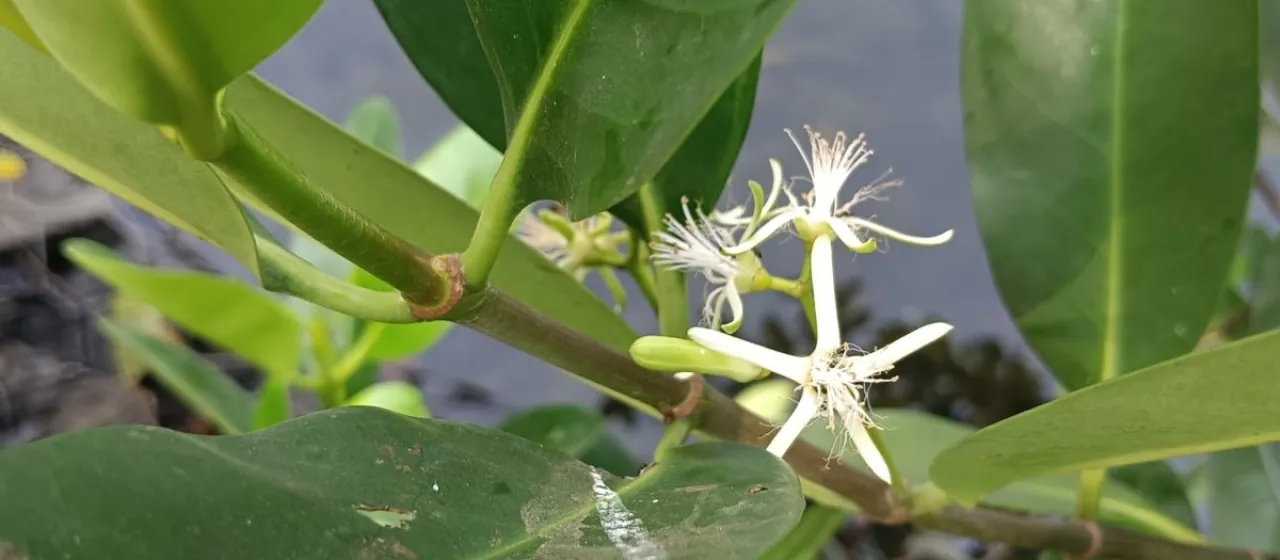
Description
Kandelia candel is a notable evergreen tree species belonging to the Rhizophoraceae family. It is a quintessential mangrove plant that has evolved specialized biological mechanisms to thrive in intertidal zones, characterized by fluctuating salt concentrations and waterlogged, anaerobic soil conditions.
The native range of this species extends across the tropical and subtropical coasts of East and Southeast Asia. It is particularly prevalent in estuarine environments and protected shorelines, where it plays a foundational role in coastal geomorphology by stabilizing substrates and buffering the shoreline against tidal energy and erosion.
Botanically, Kandelia candel is recognized for its impressive adaptive strategies, most notably its viviparous reproduction. The seeds germinate while still attached to the parent tree, producing a propagule that is well-equipped to strike root immediately upon detachment, ensuring survival in the shifting sediments of the intertidal zone.
Cultivation requirements for this species are centered on maintaining a specific hydro-period and high humidity levels. In ecological restoration projects, the focus is on selecting appropriate sites with correct sediment composition and shielding young saplings from extreme wave action until they establish a sufficiently deep and dense root network.
The economic and ecological utility of Kandelia candel is significant. Beyond its primary role in ecosystem restoration and carbon sequestration, the bark of the tree is rich in tannins, which have been historically utilized for leather tanning and the preservation of fishing gear. Today, its management is primarily focused on preserving biodiversity and protecting aquaculture zones.
- Adaptation to saline environments.
- Viviparous seed development.
- Key species for coastal erosion control.
- Rich in natural tannins used for traditional industry.