
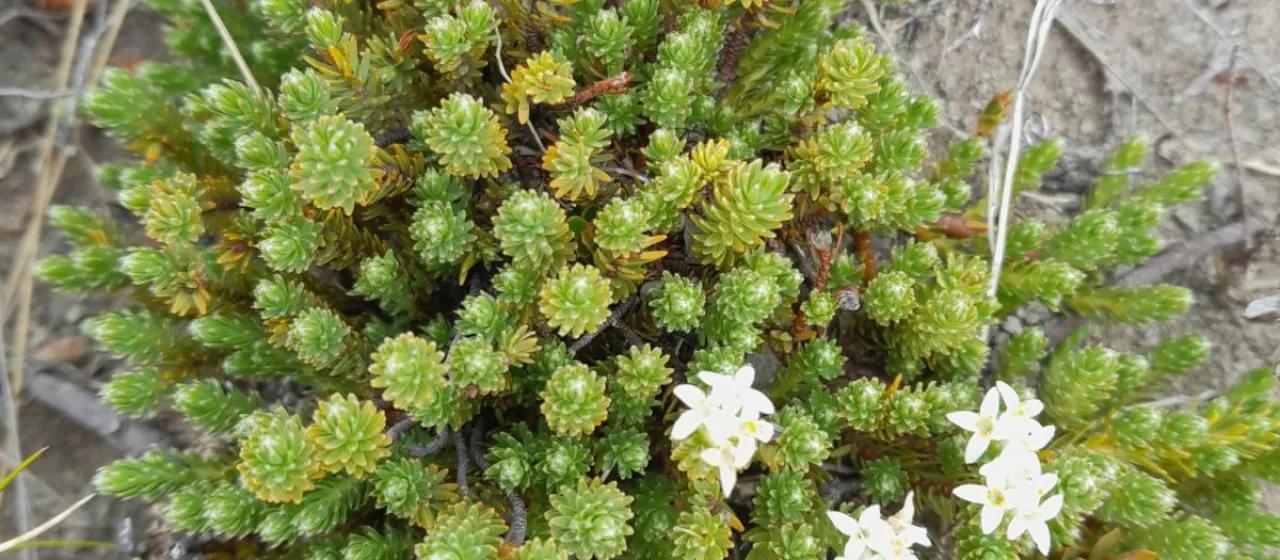
Description
Kelleria laxa is a perennial plant species belonging to the Thymelaeaceae family. It is recognized for its unique morphological features that allow it to thrive in specialized ecological niches, particularly in alpine regions. While not a commercial staple crop, it is of significant interest in botanical research and ecological restoration projects, where its resilience to environmental stress is highly valued.
The origin of Kelleria laxa is linked to the mountain regions of New Zealand, where it has evolved to persist in high-altitude environments. The natural range of this plant is confined to areas with specific microclimates, characterized by rocky terrain and distinct seasonal weather patterns. These factors significantly influence its cultivation potential in different regions around the world.
Botanically, this species is defined by its compact growth habit and specialized leaf structure, which is designed to conserve water in challenging conditions. The root system is robust enough to anchor the plant in rocky soils, making it an excellent candidate for slope stabilization. Its reproductive cycle is adapted to short growing seasons, and successful propagation usually requires mimicking natural winter stratification conditions.
Agricultural requirements for Kelleria laxa center primarily on soil composition and drainage. It thrives in well-drained, nutrient-poor, or stony soils, mimicking its natural habitat. Over-fertilization should be strictly avoided, as the plant is adapted to low-nutrient environments. Proper spacing is essential to ensure adequate airflow and prevent the development of localized humidity that could harm the plant's health.
- High resistance to cold and environmental stress.
- Strict requirement for well-draining substrate.
- Potential use for erosion control in alpine landscapes.
- Slow initial growth rate requiring patient management.
In terms of хозяйственного (economic) utility, Kelleria laxa is primarily utilized in ecological restoration and ornamental landscaping. Pests and diseases are rarely a major issue if the cultivation environment is well-managed. However, growers should monitor for root pathogens, which are typically triggered by poor drainage or excessive watering. Maintaining a dry, airy environment is the most effective preventative measure against most common botanical issues.