
Description
Black Kennedia (Kennedia nigricans) is a robust, evergreen perennial climbing plant belonging to the Fabaceae family. Known for its vigorous growth habit, this species acts as an effective climber that can cover large vertical surfaces, making it a valuable asset for both ornamental gardens and environmental restoration projects.
The plant is native to the southwestern regions of Australia, where it naturally colonizes sandy soils in coastal and inland habitats. Its evolutionary history has made it exceptionally well-adapted to nutrient-poor soils, a trait common to many legumes that form symbiotic relationships with nitrogen-fixing bacteria in their root nodules.
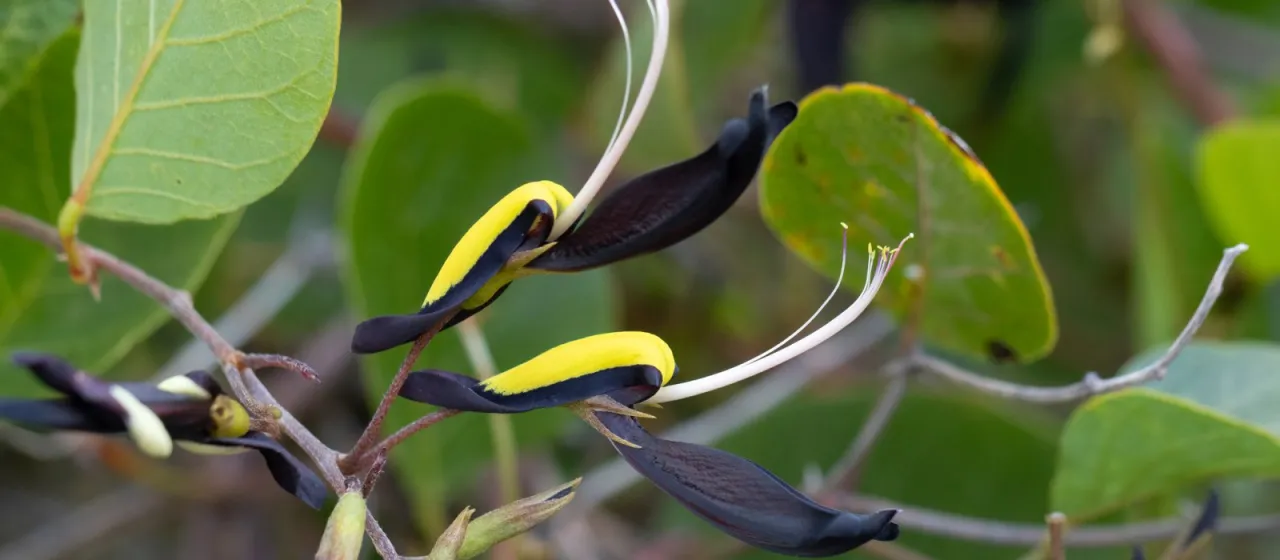
Botanically, the plant is characterized by its distinct, dark purplish-black flowers that feature a prominent yellow throat. The leaves are trifoliate, deep green, and leathery, providing a lush appearance throughout the year. The stems are woody at the base and can grow several meters in length, requiring structural support to thrive.
Agronomic success with this crop depends on selecting well-drained soil and a location with full to partial sun exposure. While the plant is drought-tolerant once established, it performs best with consistent moisture during the early establishment phase. Growers should avoid heavy, waterlogged clays to prevent root rot issues.
In terms of agricultural and land-use applications, Black Kennedia is utilized for rapid site screening, windbreak development, and erosion control on disturbed slopes. The primary threats to crop health include root pathogens triggered by excessive moisture and sap-sucking insects like aphids. Regular pruning is advised to maintain vigor and prevent the plant from becoming overly invasive.