Kentucky yellowwood
Cladrastis kentukea (Dum. Cours.) Rudd
Description
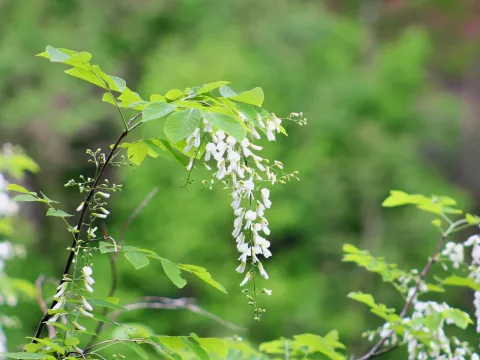
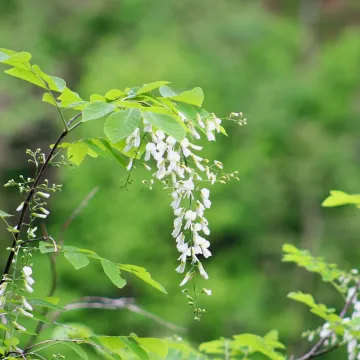
The Kentucky yellowwood (Cladrastis kentukea) is an exquisite deciduous tree belonging to the Fabaceae (legume) family. It is highly prized by horticulturists for its graceful, wide-spreading canopy and spectacular, fragrant white flower panicles that hang down like wisteria. As a member of the legume family, this tree possesses the biological ability to fix nitrogen, contributing to soil health.
This species is native to the southeastern regions of the United States, where it thrives in fertile, protected river valleys and on limestone slopes. Its natural habitat range has fostered a resilience that allows it to adapt well to various landscape settings across North America and Europe, making it a sought-after specimen for arboretums and large residential gardens.
Botanically, the tree is noted for its smooth, beech-like gray bark and bright green pinnate leaves that turn a striking clear yellow in the autumn. The flowers are undoubtedly the highlight of the tree, appearing in late spring. The tree's common name, yellowwood, is derived from the distinct yellow heartwood, which was traditionally harvested to produce a yellow dye.
Agricultural and horticultural requirements for Kentucky yellowwood include full sun exposure, which is necessary for vigorous blooming. It thrives best in deep, well-draining, and fertile soils. Growers should avoid areas with heavy, waterlogged soils, as this can lead to root issues. Pruning should be handled with care, preferably in late summer, because heavy bleeding of sap can occur if pruned during early spring.
- Highly attractive for landscape architecture as a specimen tree.
- Resistant to most common urban environmental stresses.
- Low susceptibility to serious pests and diseases.
- Slow to moderate growth rate, making it ideal for permanent garden features.
In terms of practical use, the Kentucky yellowwood is primarily utilized in decorative landscaping. Due to its size and beauty, it is frequently used in parks and large estates as an ornamental feature. While it is not a major timber species, its wood is valued by specialty woodworkers for its density and unique color, often being crafted into small furniture pieces, bowls, and high-end tool handles.
Photo gallery