
Description
Kleinia ficoides is a perennial succulent plant belonging to the Asteraceae family. Historically associated with the genus Senecio, it is now classified under the genus Kleinia. This plant is recognized for its thick, succulent leaves and structural appearance, making it a distinct subject within the group of drought-adapted vegetation.
Originating from South Africa, the plant has evolved to thrive in arid, rocky environments. Its natural habitat includes steep slopes and dry hillsides where precipitation is scarce. Due to its sensitivity to cold and humidity, large-scale outdoor cultivation is limited to regions with Mediterranean or desert-like climates, while in other regions, it is mainly grown in controlled environments or as an ornamental container plant.
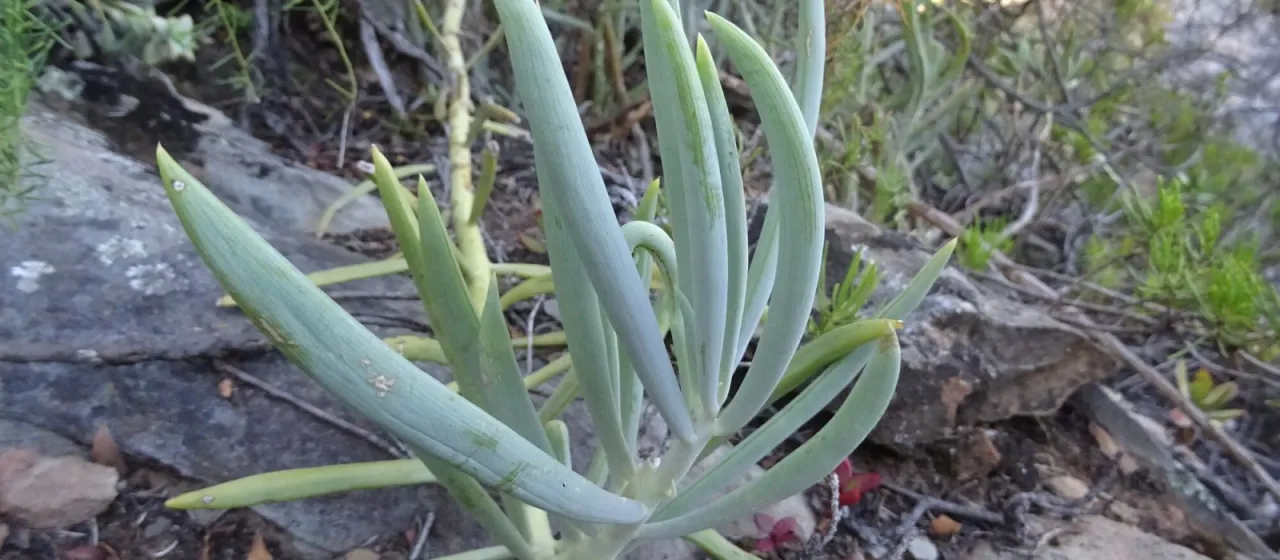
Botanically, the plant features erect, often branching stems that can reach heights of up to one meter. The leaves are succulent, usually of a glaucous or bluish-green hue, often coated in a waxy substance that minimizes water loss. The flowers are small, arranged in disc-like heads, providing a subtle aesthetic contrast to the robust foliage.
Agricultural and gardening requirements focus on excellent drainage and intense sunlight. The ideal soil profile is sandy or stony, with minimal organic content to prevent root rot. Watering cycles must be strictly managed: the plant requires a "dry-wet" regime where the soil is allowed to dry out completely between irrigation sessions to mimic its native environmental stressors.
The primary use for Kleinia ficoides is in xeric landscaping and ornamental horticulture. It is frequently employed in rock gardens and greenhouses due to its low water consumption and unique architectural form. The plant is generally resilient, but farmers and gardeners must remain vigilant against mealybugs and spider mites, as well as fungal infections resulting from poor soil aeration and waterlogged roots.