
Description
Forest scabious (Knautia drymeia) is a herbaceous perennial plant belonging to the Caprifoliaceae family. While primarily recognized as a component of wild forest-edge ecosystems, it serves as a valuable asset for sustainable agriculture, particularly in promoting biodiversity and supporting pollinator health.
Native to Central and Southeastern Europe, this plant is well-adapted to temperate climates. Its natural range reflects a preference for woodland borders and light shade, yet it has proven sufficiently versatile for use in managed forage mixtures where soil conditions remain conducive to its growth.
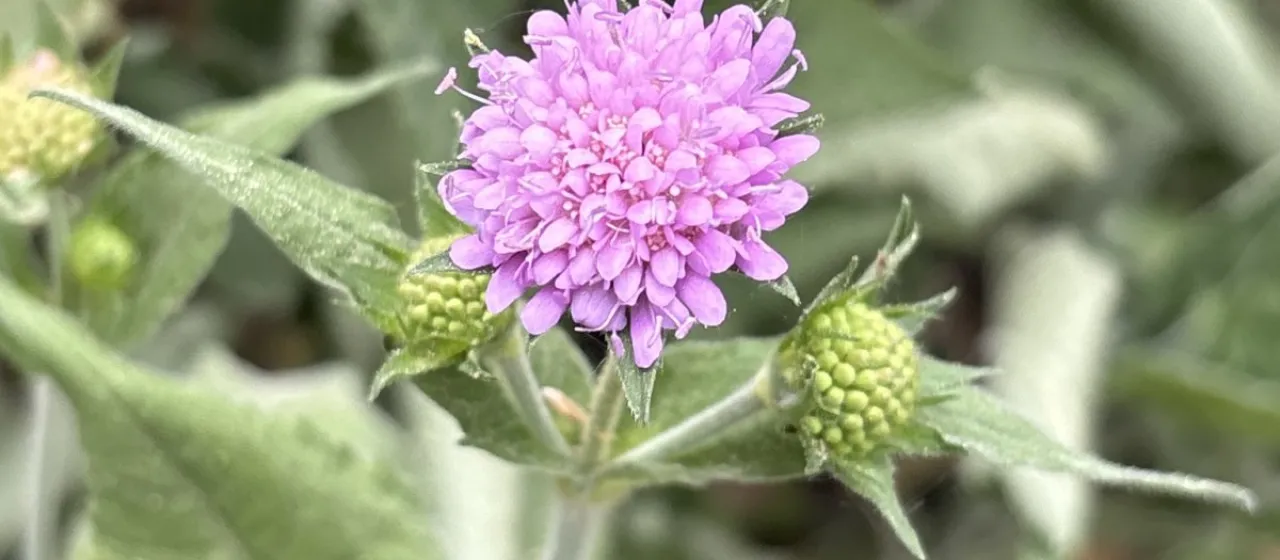
Botanically, Knautia drymeia is characterized by its hairy, upright stems that typically reach heights between 40 and 80 cm. The foliage consists of opposing lanceolate leaves with serrated edges. The plant produces dense, flower-filled heads surrounded by an involucre of small bracts, showcasing purple to pink-hued florets that bloom throughout the summer months.
Agronomic requirements for Forest scabious prioritize well-drained, moderately fertile soils with a near-neutral pH level. While it shows tolerance for semi-shaded locations, it thrives best in environments that mimic its natural habitat. Proper field management requires periodic inspection of moisture levels to ensure the soil structure supports deep root penetration.
The economic and ecological utility of the plant can be categorized as follows:
- Integration into wildflower seed mixes for pasture restoration.
- Providing essential forage for wild and domestic honey bees.
- Serving as a structural element in ecological landscape design.
Disease management involves monitoring for common fungal issues such as powdery mildew, which can arise in overly dense or humid planting environments. Controlling pests requires a balanced approach using integrated pest management (IPM) strategies to ensure that the beneficial insect populations, which the plant attracts, remain protected from synthetic chemical interventions.