
Description
Koelpinia linearis is an annual herbaceous plant belonging to the Asteraceae family. Known for its resilience in arid environments, this species is frequently encountered in various agro-ecosystems and natural landscapes across Western and Central Asia, serving as an indicator of specific soil and climatic conditions.
The native habitat of this plant encompasses arid and semi-arid regions, where it thrives in sandy, loose, or rocky soils. It is highly adapted to environments with limited rainfall and high solar radiation, often appearing in steppe regions where it competes for moisture with native grasses and introduced agricultural crops.
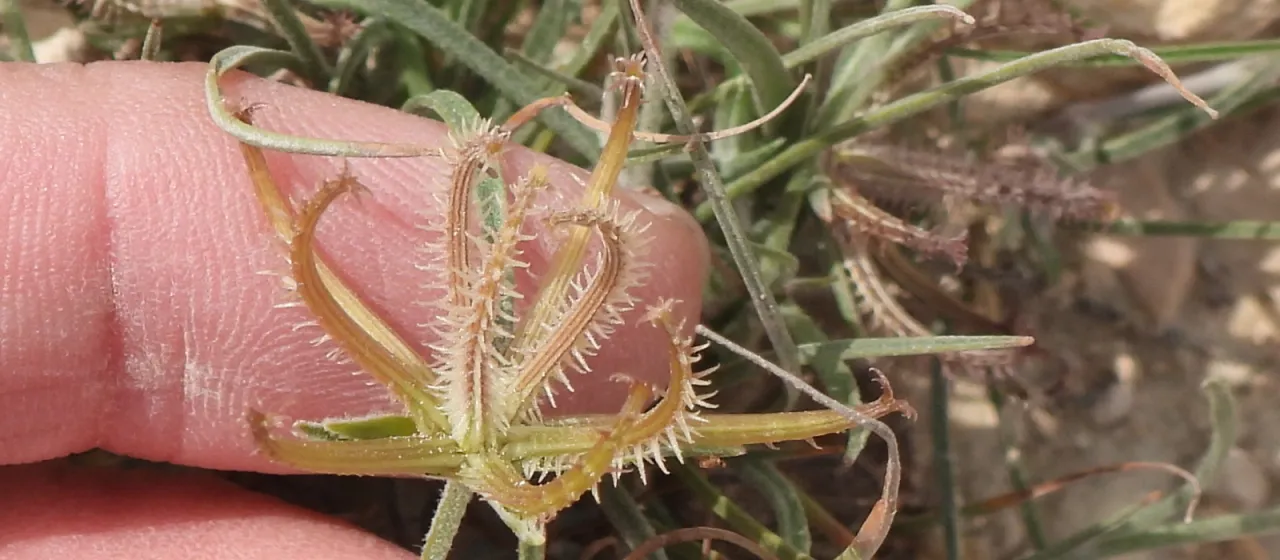
Botanically, Koelpinia linearis is characterized by its slender, linear leaves and distinct yellow flower heads that resemble those of other members of the Cichorieae tribe. The plant grows in a rosette pattern in its early stages, later producing branching stems. Its seeds are equipped with hooked appendages, which are highly efficient for dispersal via attachment to livestock or wildlife.
From a хозяйственное (agricultural) perspective, the species is generally considered a weed in cultivated areas, as it can deplete soil resources and interfere with crop growth. However, in marginal rangelands, it contributes to the total green biomass available for livestock consumption during the early spring period, before the plant becomes too fibrous or spiny.
Management of the species relies on integrated pest and weed control strategies. Common biological pressures include:
- Fungal pathogens such as powdery mildew in dense populations.
- Insect pests, particularly aphids and beetles that target foliage during the active growth phase.
- Mechanical disturbances like plowing, which are highly effective at controlling young seedlings.