
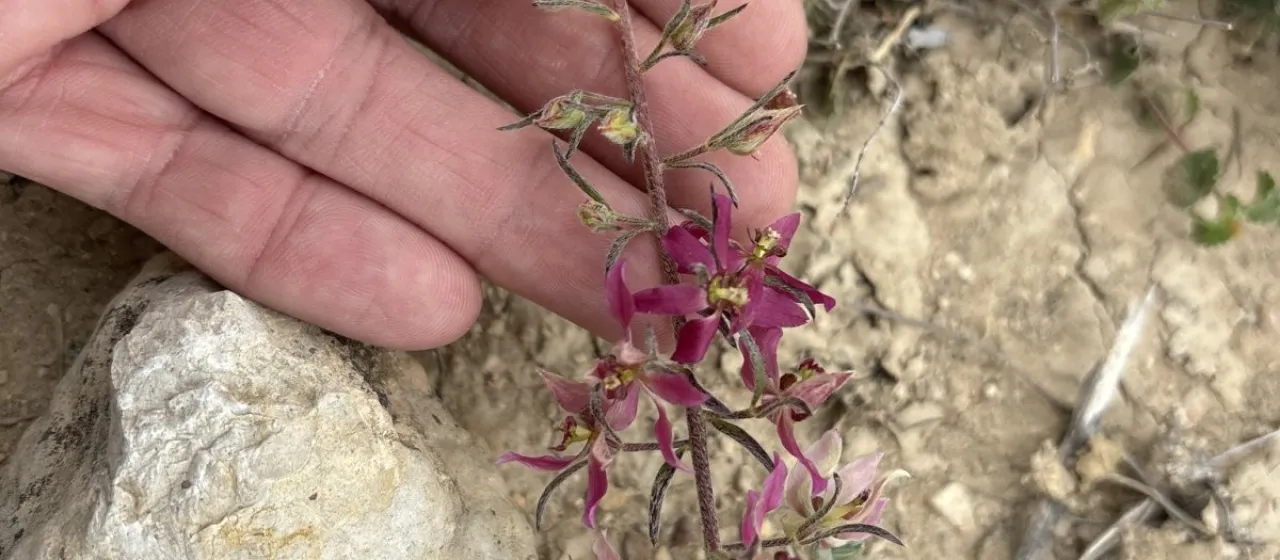
Description
Krameria lanceolata is a distinctive perennial herbaceous plant belonging to the Krameriaceae family. This species is widely recognized in botany for its semi-parasitic nature, as it attaches its root system to the roots of host plants to extract water and nutrients, even while retaining the ability to perform photosynthesis to sustain its own growth.
The native range of this plant extends across the arid and semi-arid regions of North America, specifically occurring in the southern United States and Mexico. It is highly adapted to harsh environments, such as dry prairies, rocky slopes, and sandy soils, where water retention and mineral absorption are critical challenges for most plant life.
From a botanical standpoint, Krameria lanceolata is characterized by its slender, lance-shaped leaves and intricately structured flowers, which typically display shades of purple or crimson. The reproductive biology of the plant is tightly coupled with specific native bee species, which are essential for successful cross-pollination in its natural habitat.
Agricultural cultivation of this species is complex and rarely practiced on a commercial scale. The primary challenge involves managing its parasitic requirement for a host plant and ensuring the soil remains nutrient-poor, as the plant is not adapted to the high-fertility environments typically found in intensive greenhouse or field farming systems.
The economic value of this plant lies primarily in its medicinal roots, which have been used historically for their high tannin content. These compounds provide astringent and antimicrobial properties, leading to research into their applications in modern pharmacology. Protecting wild populations remains a priority, as habitat loss poses a significant threat to its survival.
- Semi-parasitic root system requiring host plants.
- High tolerance for extreme heat and drought.
- Medicinal potential due to secondary metabolites.
- Specific pollination requirements by wild bees.