
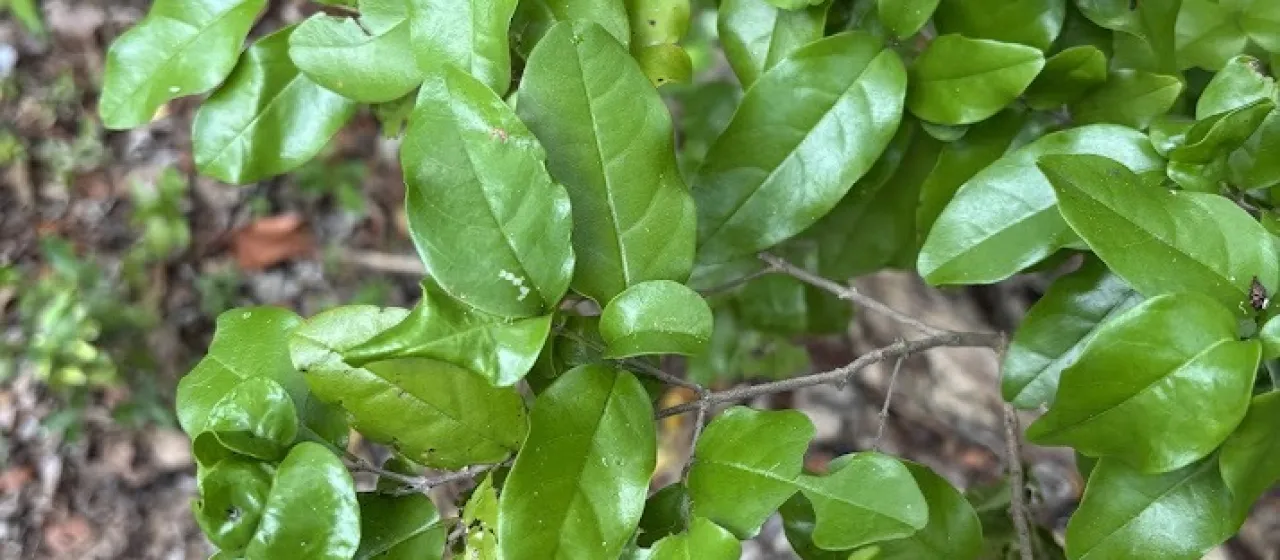
Description
Black ironwood (Krugiodendron ferreum) is a prominent member of the Rhamnaceae family. It is widely recognized for producing one of the densest and hardest woods in existence, which possesses the unusual characteristic of being unable to float in water due to its extreme specific gravity.
Native to the tropical regions of the Western Hemisphere, this tree is distributed across Southern Florida, the Bahamas, the Caribbean, and parts of Central and South America. It typically thrives in diverse habitats, ranging from coastal forests to dry, rocky limestone soils where it has adapted to survive with limited water availability.
Botanically, the tree is characterized by a very slow growth rate, which contributes to the tight grain and hardness of its wood. Its leaves are evergreen, leathery, and elliptic in shape. The tree produces small, inconspicuous flowers that eventually develop into small, drupe-like fruits, which are an important food source for local bird populations within its habitat.
Cultivation requirements for Krugiodendron ferreum emphasize the need for well-draining soil and full sun exposure. It is a drought-tolerant species, making it suitable for xeriscaping in tropical and subtropical regions. Farmers and gardeners should note that due to its sluggish growth, this tree is rarely planted for short-term harvest but is valued for its longevity and architectural presence in the landscape.
Economically, the timber is the primary product, historically sought after for tool handles, turnery, and fine cabinet work where exceptional durability is required. The species shows strong natural resistance to pests, termites, and wood-decay fungi. Common issues include:
- Sensitivity to poor soil aeration (waterlogging).
- Slow juvenile growth requiring protection from faster-growing weeds.
- Susceptibility to heavy frost in non-tropical zones.