
Description
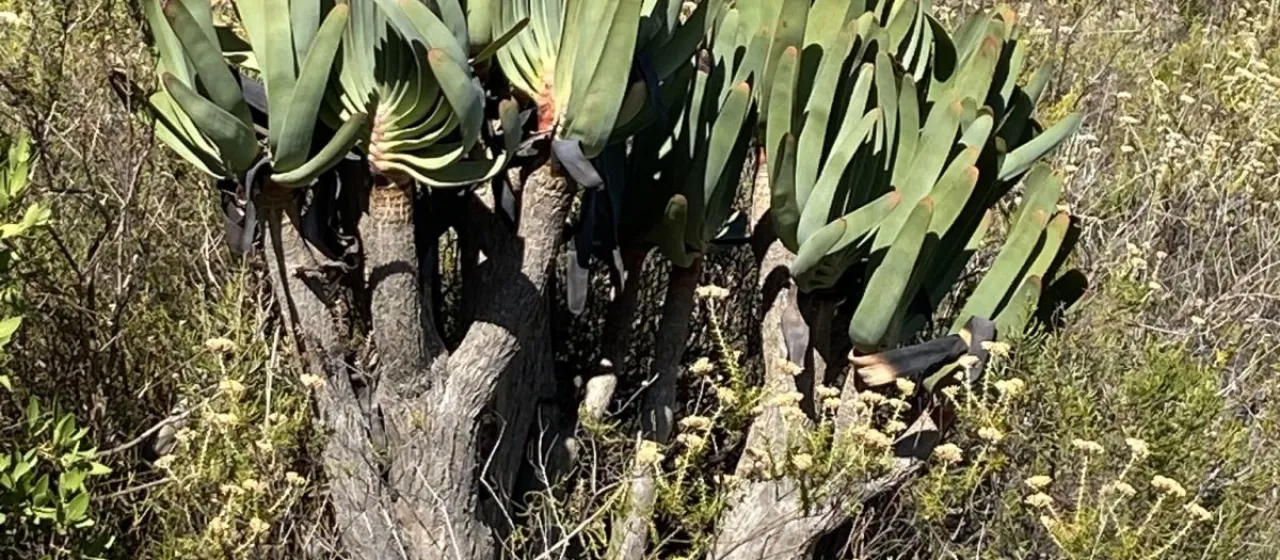
Fan Aloe (Latin: Kumara plicatilis) is a distinctive succulent belonging to the Asphodelaceae family. Formerly classified within the Aloe genus, it has been reclassified into the distinct genus Kumara. This tree-like succulent is highly valued for its unique structural arrangement, making it a prominent subject in the field of ornamental horticulture.
The plant originates from the Western Cape region of South Africa. In its native habitat, it grows on rocky mountain slopes, a factor that has heavily influenced its physiological adaptation to arid environments. When cultivated as an agricultural or horticultural crop, it requires strict adherence to environmental parameters to maintain its health and architectural integrity.
Botanically, this species is characterized by its woody trunk and fan-shaped leaves arranged in two ranks. The leaves are smooth, glaucous green, and lack the spines typical of many other aloe species. During the flowering stage, the plant produces tall racemes with vibrant red or orange tubular flowers, which are ecologically essential for attracting avian pollinators in its native range.
Agronomic requirements emphasize the necessity of high-intensity sunlight and exceptional soil drainage. The plant thrives in gritty, sandy loam substrates that prevent moisture stagnation. In indoor or controlled greenhouse cultivation, it is vital to allow the soil to dry out completely between waterings, particularly during the dormant winter months, to prevent root decay.
Common issues during cultivation include susceptibility to fungal pathogens caused by high humidity and poor ventilation. Pests such as mealybugs and spider mites may also affect the plant, necessitating an integrated pest management approach using systemic insecticides. With correct maintenance, the plant shows high longevity and serves as an excellent decorative specimen in arid-climate landscaping.