
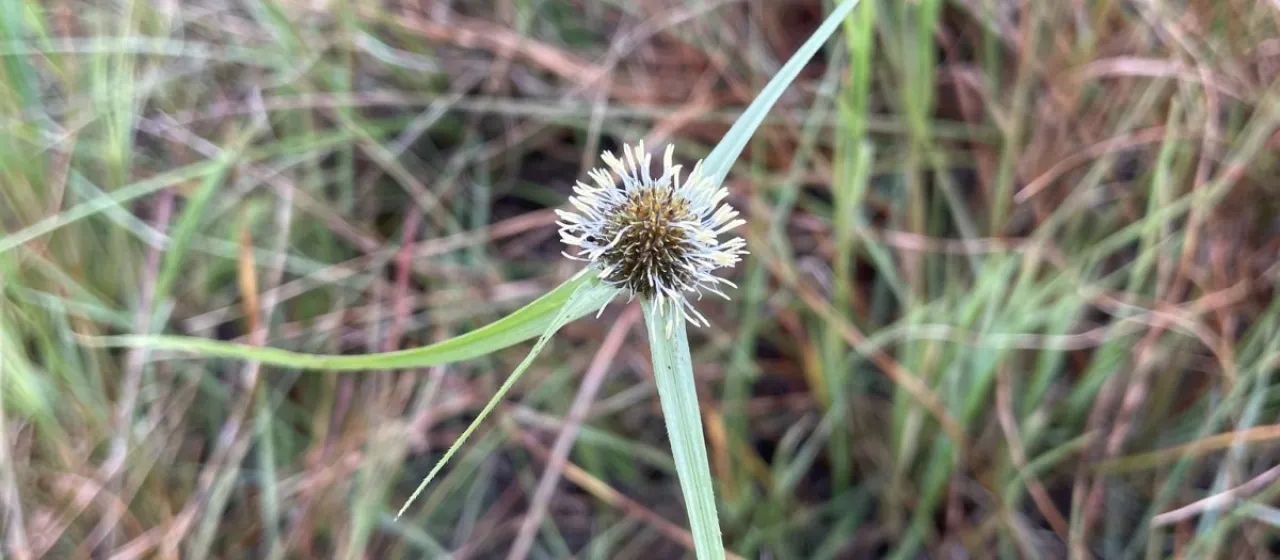
Description
Kyllinga erecta is a perennial herb belonging to the Cyperaceae (sedge) family. In agricultural settings, it is recognized primarily as a persistent and invasive weed, often found in tropical and subtropical regions where it competes fiercely with crops for water, nutrients, and sunlight.
The plant originates from Africa but has established itself globally in diverse habitats. It favors moist soil conditions and is frequently observed in irrigation ditches, flooded rice fields, and wet pasture lands. Its ability to tolerate saturated soils gives it a significant advantage over many traditional crops in high-moisture environments.
Botanically, Kyllinga erecta is characterized by a creeping rhizome system that allows for dense vegetative spread. The culms are triangular, reaching heights of 10 to 40 cm, and are topped with distinctive, dense, capitate inflorescences. These features enable the plant to form dense mats that can easily outcompete desirable plant species in agricultural fields.
Agronomic management requires a multi-faceted approach. Due to its underground rhizomes, simple mechanical cultivation often fails, as broken pieces of the root system can generate new plants. Effective control measures typically involve the strategic application of systemic herbicides in combination with soil moisture management, as the weed thrives best when soil hydration is abundant.
While the plant has minimal economic value, understanding its life cycle is crucial for maintaining field hygiene. It acts as an alternate host for several insect-borne pathogens, potentially impacting neighboring crops. Farmers must prioritize early detection and aggressive control to prevent the establishment of large colonies that could lead to significant yield losses over time.
- Highly efficient vegetative propagation via rhizomes.
- Superior resilience to waterlogging and poor soil aeration.
- Significant competitor for phosphorus and nitrogen in fields.