
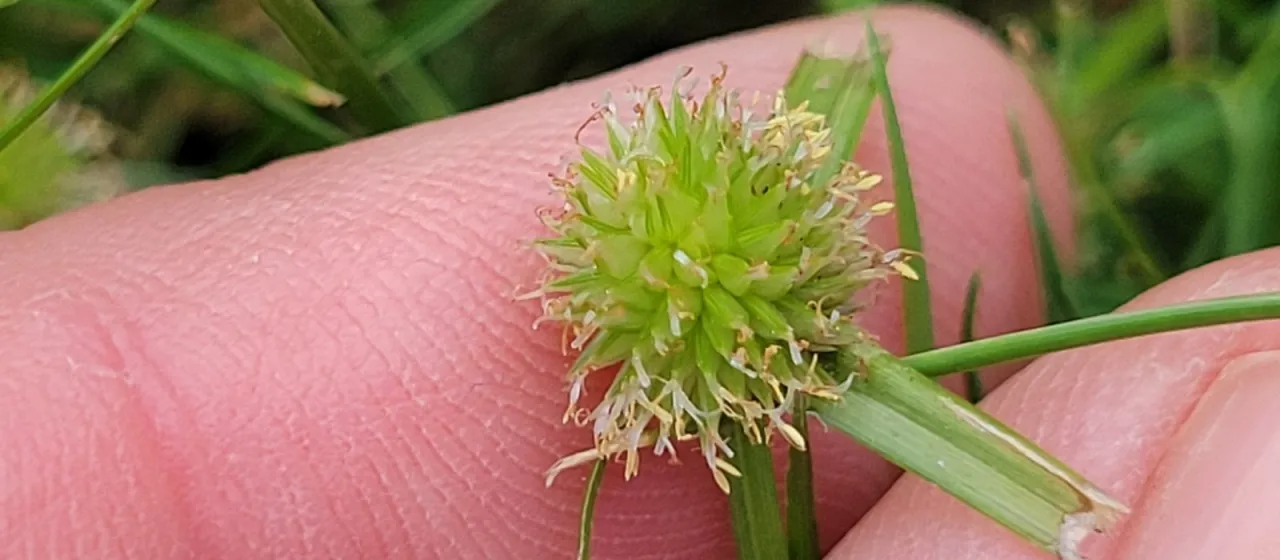
Description
Kyllinga gracillima is a perennial herb belonging to the Cyperaceae family. In agricultural settings, it is primarily recognized as a persistent and invasive weed, often found in moist environments. Its ability to propagate both through seed production and vigorous rhizome systems makes it a significant management challenge for farmers and land managers worldwide.
Originally native to parts of East Asia, including China, Japan, and Korea, this species has successfully naturalized in many temperate regions globally. It thrives in humid, lowland areas and is frequently observed in rice paddies, irrigation channels, and turfgrass environments, where consistent moisture levels support its aggressive growth cycle.
Botanically, it is characterized by slender, creeping rhizomes that allow it to form dense mats. The culms are three-angled, usually reaching heights of 10–30 cm. Its leaves are narrow and grass-like, while the inflorescence consists of a solitary, terminal head of tiny spikelets. This structure is highly efficient at ensuring reproduction in favorable ecological niches.
Regarding its requirements, Kyllinga gracillima demands substantial moisture and high light availability to reach its full development potential. It adapts well to organic-rich, silty, or damp soil types. Agricultural control is complicated by the weed's resilience; partial removal of the rhizomes often leads to rapid regrowth, requiring repeated intervention and monitoring of affected areas.
From an agricultural standpoint, the plant is viewed as a pest that interferes with crop growth by competing for nutrients and space. Effective management strategies often involve a combination of practices:
- Application of selective systemic herbicides
- Regular mechanical removal of the root system
- Optimization of drainage systems to reduce habitat suitability
- Utilization of competitive cover crops