
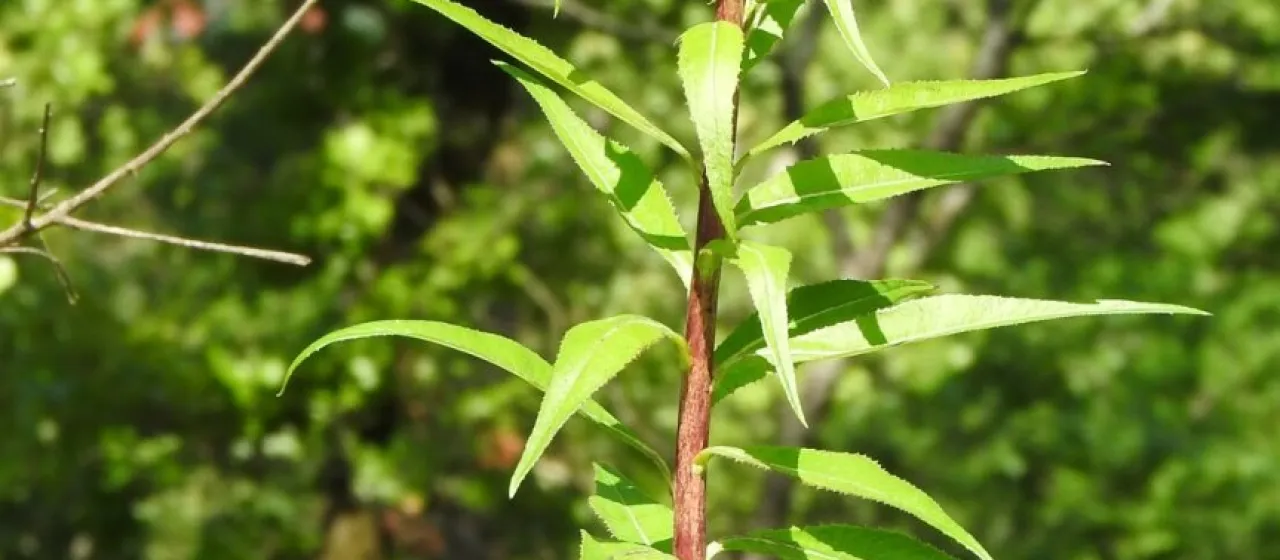
Description
Tall lettuce (Lactuca canadensis) is a herbaceous plant belonging to the Asteraceae family. Known colloquially as wild lettuce or Canada lettuce, it is recognized for its robust growth habit and ability to colonize various habitats throughout North America, ranging from meadows to woodland edges.
The plant is native to North America and exhibits a wide distribution across the continent. It typically thrives in sunny to partially shaded locations with moist, well-drained soils. Its versatility allows it to adapt to diverse ecological conditions, often establishing itself as a hardy perennial in temperate zones.
Botanically, Lactuca canadensis is distinguished by its tall, often reddish-tinged stems that can grow up to 2 meters in height. The foliage is quite variable, with leaves ranging from entire to deeply lobed shapes. The plant produces numerous small yellow flower heads, which are characteristic of the Lactuca genus, arranged in terminal panicles.
In terms of cultivation, this species requires minimal specialized care compared to common garden lettuce. It prefers fertile, loamy soils and requires consistent moisture during the early vegetative stage. The plant is highly resilient, surviving cold winters and adapting well to soil conditions that might be unsuitable for more sensitive vegetable crops.
The agricultural and economic utility of tall lettuce is primarily centered on its potential as a forage plant and its historical use in herbal medicine. The milky latex found in the stems contains compounds that have been studied for their sedative properties. It is occasionally managed in wild pastures to provide supplemental grazing, though its bitter flavor profile in mature stages can limit intake.
- Requires well-drained soil to prevent root rot.
- Susceptible to powdery mildew in high-humidity conditions.
- Can be affected by aphids during the growth season.
- Best harvested for forage before the flowering stage.
Common pests include aphids, which often feed on the sap of young shoots, and mollusks like slugs or snails that target seedling foliage. Diseases are primarily fungal, often appearing as leaf spots or mildew when the crop is planted in areas with poor air circulation or excessive moisture levels.