
Description
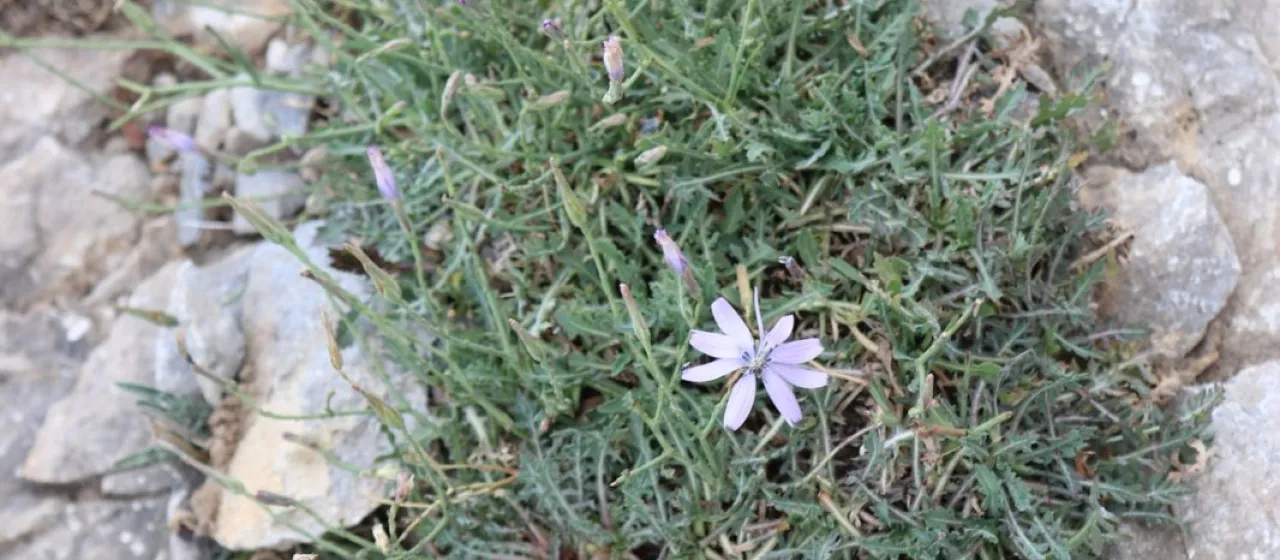
Lactuca intricata is a perennial herbaceous plant belonging to the Asteraceae family. This species is a wild relative of the common garden lettuce, recognized by its complex branching patterns and its exceptional ability to thrive in challenging, rocky environments where most conventional leafy vegetables would fail.
The plant is native to the Eastern Mediterranean, primarily found in Greece and nearby regions. It naturally inhabits rocky slopes, limestone cliffs, and arid landscapes. This xerophytic adaptation has allowed the species to develop a strong survival strategy against the harsh, dry summers typical of its endemic area.
Botanically, Lactuca intricata is characterized by its stiff, intricately branched stems, which justify its scientific name. The foliage is often deeply lobed and protected by a waxy cuticle that helps regulate water loss. Its root system is deep and penetrating, anchoring the plant firmly into rocky substrates while accessing subsurface moisture during the dry season.
Cultivation requirements for this species are specific: it demands excellent drainage, as it is highly susceptible to root rot in waterlogged conditions. It thrives in well-aerated, alkaline soils. For successful growth, the crop requires full sun exposure and minimal irrigation, mimicking its natural habitat. It shows good resistance to heat but may suffer in prolonged frost without proper protection.
The primary agricultural use of Lactuca intricata is in plant breeding programs. As a wild relative, it contains valuable genetic traits, including resistance to drought and certain soil-borne pathogens. Breeders explore these traits to develop more resilient varieties of cultivated lettuce. While not a major commercial vegetable, it remains a plant of significant interest for genetic conservation and future climate-resilient agriculture.
- Extreme drought tolerance
- High resistance to environmental stress
- Valuable genetic source for crop improvement
- Adaptability to nutrient-poor rocky soils