
Description
Blue lettuce (Lactuca perennis) is a perennial herbaceous plant belonging to the Asteraceae family. Unlike common annual lettuce varieties, this species is characterized by its ability to persist over several years, relying on a robust root system that adapts to challenging environmental conditions, particularly in rocky or mountainous terrains.
The plant originates from the mountainous regions of Central and Southern Europe. Its native habitat includes dry, sunny slopes with limestone-based soils. Because of this origin, the crop displays significant drought tolerance and thrives in environments where many other leafy vegetables would fail. It is a highly resilient species that serves as a valuable example of wild-growing relative to modern horticultural crops.
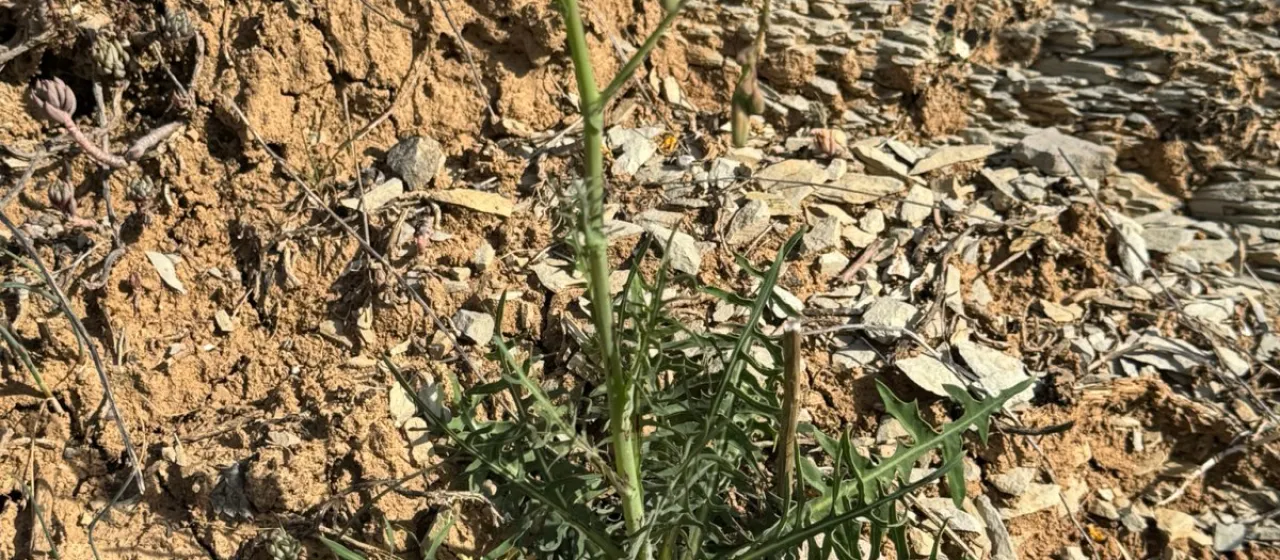
Botanically, Lactuca perennis features a basal rosette of pinnately lobed leaves and produces branched stems with striking blue or violet flower heads. Unlike the yellow-flowered species of the Lactuca genus, this plant is easily identified by its aesthetic blooms. The plant contains a milky sap, and its seeds are equipped with a pappus, facilitating wind dispersal across open landscapes.
Regarding agrotechnics, the crop requires well-draining, loose soils with a neutral to alkaline pH level. It performs best in full sun exposure. In a garden or small-scale farming setting, it is important to prevent waterlogging, as the root system is susceptible to decay in heavy, saturated soils. Minimal fertilization is recommended, as high nitrogen levels often stimulate excessive foliage growth at the expense of root hardiness.
The practical use of Blue lettuce is primarily ornamental, though it is sometimes considered a forage crop in specific regional contexts. It is also of interest to breeders as a genetic repository for developing stress-resistant lettuce varieties. Typical threats to the health of the plant include:
- aphids that cluster on the underside of leaves;
- slugs and snails, especially during damp seasons;
- powdery mildew, which develops in stagnant, humid air;
- root rot, often triggered by excessive rainfall and poor soil structure.