
Description
Blue lettuce (Lactuca pulchella) is a perennial herbaceous plant belonging to the Asteraceae family. In an agricultural context, it is widely recognized as a persistent and troublesome weed that competes with crops for soil moisture and essential nutrients. Its resilience and ability to spread rapidly make it a significant focus of weed management programs.
The native range of this species extends across various regions of North America and Eurasia. It typically inhabits open areas, including irrigated fields, roadsides, and abandoned lands. Its broad environmental tolerance allows it to thrive in diverse soil conditions, from sandy to heavy loam, contributing to its status as a widespread agricultural pest.
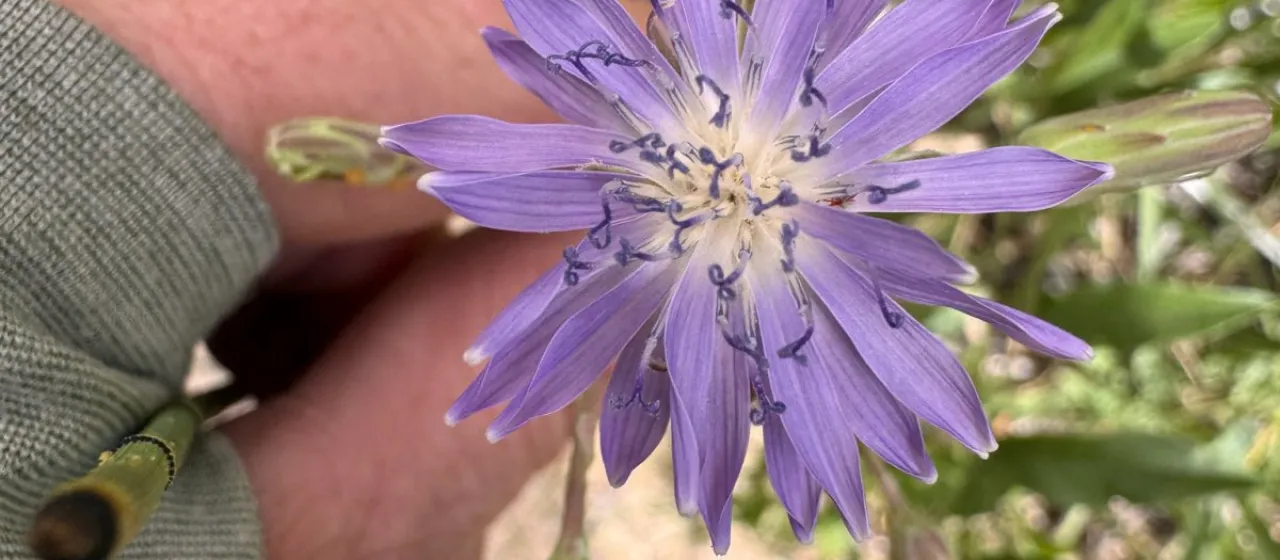
Botanically, Lactuca pulchella is characterized by a deep, rhizomatous root system, which is its primary mechanism for survival and vegetative propagation. The stems are erect, growing up to 120 cm, and often feature a glaucous, bluish-green appearance. Its distinctive blue-to-violet flower heads distinguish it from other members of the lettuce genus, making it relatively easy to identify during its flowering season.
Managing blue lettuce requires an integrated approach due to its efficient vegetative reproduction. Agronomic control techniques focus on the mechanical disruption of the root system, such as deep plowing and timely cultivation, which help starve the plant of its stored energy. Chemical control involving systemic herbicides is often necessary to achieve long-term suppression in infested fields.
While the economic impact of blue lettuce is primarily detrimental to crop yield, it occasionally appears in natural forage areas. However, because it contains bitter compounds, its nutritional value for livestock is limited. Thus, agricultural research remains concentrated on eradication methods to maintain the cleanliness and productivity of arable land for high-value crops.
- Extensive root system capable of deep penetration.
- Strong potential for vegetative regeneration.
- Adaptability to a wide variety of climatic conditions.
- Presence of bitter alkaloids in the foliage.