
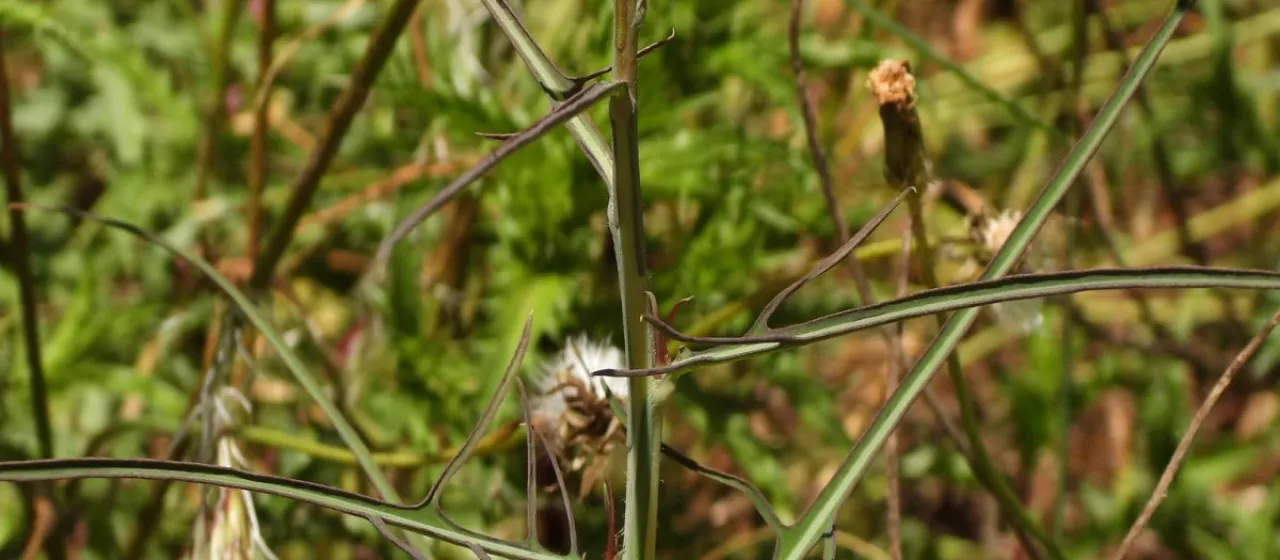
Description
Willow lettuce (Lactuca saligna) is a herbaceous plant belonging to the Asteraceae family. Known for its distinct linear leaves and tolerance to saline conditions, this species is frequently identified as a halophyte. In agricultural contexts, it is sometimes managed as a weed, but it holds promise as a resilient forage crop for marginal lands affected by soil salinity.
Originating from Southern Europe and the Mediterranean basin, the species has naturalized globally across temperate regions. It is commonly found in disturbed habitats, salt marshes, and alongside transport corridors, demonstrating a remarkable ability to survive in environments where competing vegetation often struggles to establish.
The botanical structure of Willow lettuce includes a slender, branching stem that can grow up to one meter in height. Its leaves are notably narrow, often entire or slightly lobed, providing a slender appearance that justifies its common name. The plant produces small, yellow flower heads arranged in narrow panicles, which later develop into achenes equipped with a pappus for wind dispersal.
Cultural requirements emphasize the plant's preference for well-drained, sunny locations with high mineral content in the soil. While it does not require intensive fertilization, site selection is crucial to ensure that the plant does not invade adjacent productive fields. In managed systems, sowing should be timed to avoid overlapping with main crops to minimize competitive pressure.
The economic utility of Lactuca saligna lies in its phytoremediation potential and its use as emergency fodder in arid zones. By utilizing land that is otherwise unsuitable for conventional cereal crops, farmers can improve the productivity of marginal fields. Continued research is focused on selecting varieties that maximize biomass production while maintaining the plant's inherent hardiness.
- High salt tolerance
- Drought resistance
- Adaptability to disturbed soils
- Wind-assisted seed dispersal
Common pests include aphids and various beetle species that target the foliage. Disease susceptibility is generally low, although powdery mildew can appear in suboptimal conditions with poor airflow. Integrated pest management strategies, such as mechanical weeding and proper spacing, are recommended to maintain crop health and prevent the spread of the plant as an unwanted weed.