
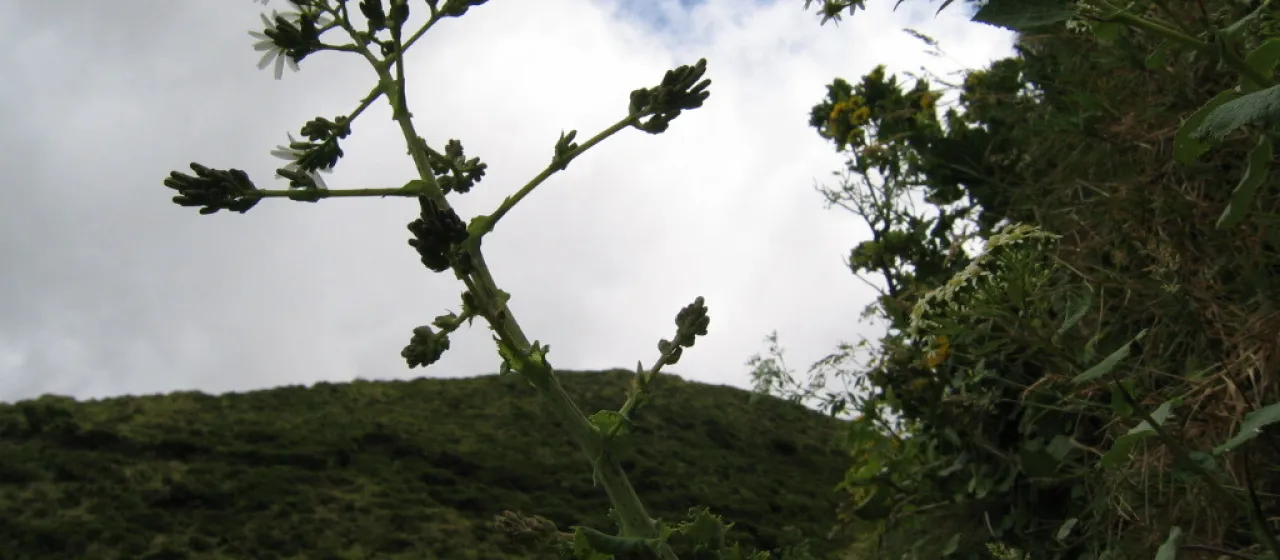
Description
Watson's lettuce (Lactuca watsoniana) is a rare species of herbaceous plant belonging to the Asteraceae family. While it is not cultivated as a mass-market agricultural crop, it remains a significant species in the study of insular plant biodiversity and is strictly protected within its natural habitat.
The plant is native to the Azores, an archipelago in the Atlantic Ocean, making it a micro-endemic species. Its range is extremely limited, and it is found primarily in specific natural niches where the soil and humidity conditions provide an environment suitable for its unique physiological needs.
Botanically, the plant is characterized by a robust rosette of leaves and a flowering stem that develops during its reproductive cycle. As a member of the genus Lactuca, it produces flower heads that are classic representatives of the daisy family. Its growth habit is perfectly suited to the misty and temperate environment of its home islands.
The climatic requirements for the species involve high humidity and mild, consistent temperatures. The soil should be well-drained and nutrient-rich, often resembling the volcanic substrates found in the Azores. In research settings, the cultivation of this species requires careful moisture management to prevent rot and ensure healthy development.
Currently, the plant is not used for commercial agriculture, as the focus remains on its conservation and ecological role. Potential pests and diseases are typical for those affecting the Asteraceae family, such as fungal pathogens when exposed to stagnant air, although the wild populations are largely influenced by competition from invasive non-native plant species.