Maidenhair vine
Muehlenbeckia complexa (A. Cunn.) Meisn.
Description
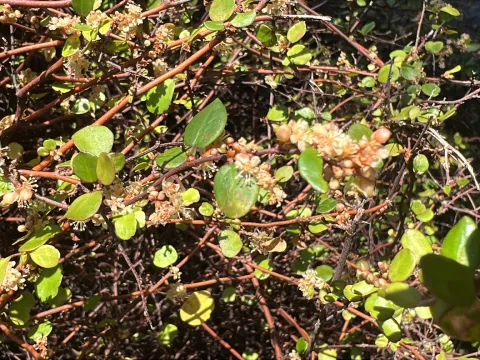
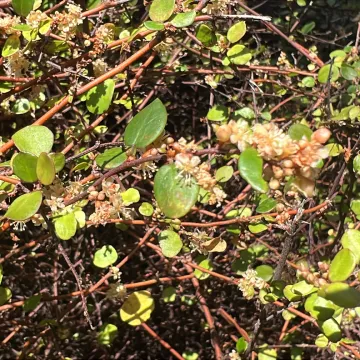
Maidenhair vine (Muehlenbeckia complexa) is a vigorous, semi-evergreen perennial belonging to the Polygonaceae family. Often referred to as "wire vine" due to its dense network of wiry, interlaced stems, this plant is highly prized for its rapid growth rate and textural appeal. It functions effectively as a ground cover, a climbing vine, or a trailing plant in hanging baskets.
Native to New Zealand, this species has evolved in diverse environments ranging from coastal cliffs to rocky hillsides. This evolutionary history makes it highly adaptable to various soil types and exposure levels. While it thrives in maritime climates, it is somewhat sensitive to hard frosts, and in colder regions, it is often grown as an indoor plant or a seasonal outdoor feature that requires winter protection.
The botanical structure of Muehlenbeckia complexa is characterized by tiny, alternate, round leaves that provide a lush appearance. The flowers are small, insignificant greenish-white blossoms that appear in late summer. However, the plant is primarily cultivated for its architectural stem structure rather than its floral display, making it a staple in modern minimalist landscaping.
Agricultural and gardening requirements focus on providing well-drained, fertile soil with a neutral to slightly acidic pH. The plant flourishes in full sun to partial shade. Irrigation should be consistent, ensuring the substrate remains moist but never waterlogged, as excess moisture can lead to root rot. Regular pruning is necessary to maintain the desired shape and to prevent the plant from becoming invasive.
Common pests include spider mites and scale insects, which can be particularly problematic in dry or indoor conditions. Diseases are relatively rare if the plants are given adequate air circulation and proper watering. Monitoring for leaf drop or stem browning can often reveal early issues with soil drainage or light availability, allowing for quick adjustments to care routines to preserve the plant’s health.
Photo gallery