
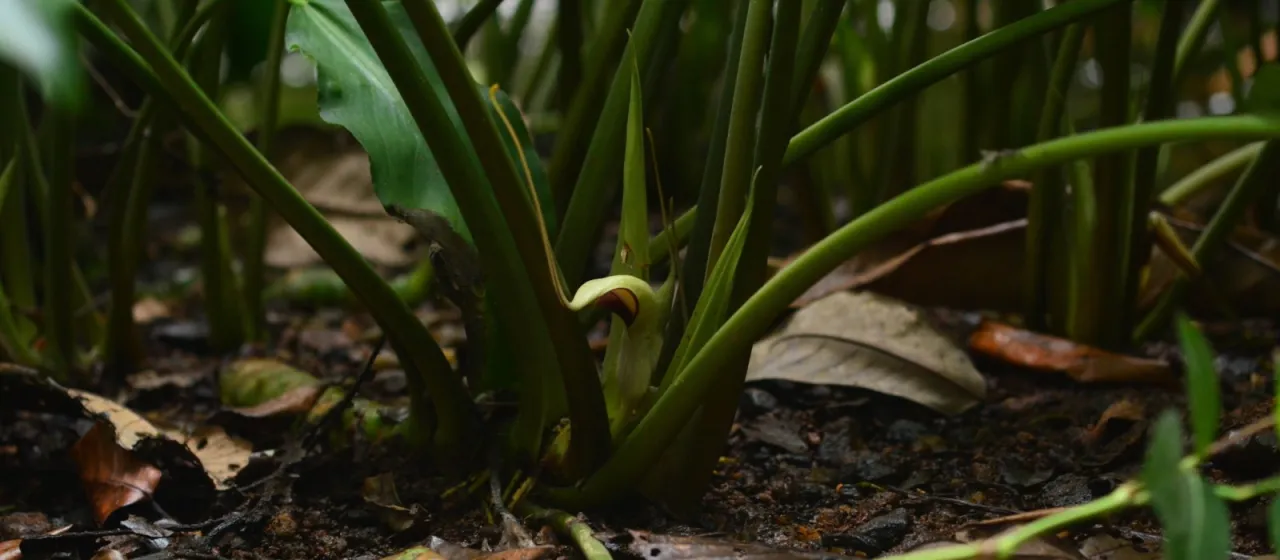
Description
Lagenandra toxicaria is a unique perennial plant species belonging to the Araceae family. Known for its specific adaptation to humid environments, this plant thrives in aquatic and semi-aquatic habitats, establishing itself as a notable member of the tropical flora frequently studied by aquatic horticulturists.
The plant originates from Sri Lanka, where it naturally occupies the margins of rivers and streams. Its distribution is closely linked to its preference for high atmospheric humidity and waterlogged soil conditions. Historically, this species has been integrated into botanical collections due to its robust and distinctive appearance, which stands out among other wetland vegetation.
Botanically, it features thick, creeping rhizomes and large, leathery leaves characterized by a prominent venation pattern. The "toxicaria" epithet refers to the plant's chemical defenses, which include specialized cells that deter herbivores. This biological feature makes the plant relatively resistant to common pests, although it requires careful handling during cultivation.
Regarding agrotechnical requirements, Lagenandra toxicaria demands a nutrient-rich, well-aerated substrate that mimics its natural silty environment. It performs best under moderate, indirect light, as direct exposure can easily stress the plant. Proper water circulation and consistent temperature regulation are vital for maintaining the plant's structural integrity and leaf coloration.
In terms of хозяйственное (economic/practical) use, the plant is primarily utilized for aesthetic purposes in paludariums and advanced aquatic displays. Its slow growth rate makes it a premium species for collectors who prioritize long-term aquascaping projects. While not a commercial crop in the traditional sense, it remains a vital subject for research in tropical botanical nurseries.
- High sensitivity to water chemistry fluctuations
- Requirement for specialized nutrient-dense substrates
- Resistance to many common leaf-eating insects
- Ideal for controlled tropical greenhouse environments