
Description
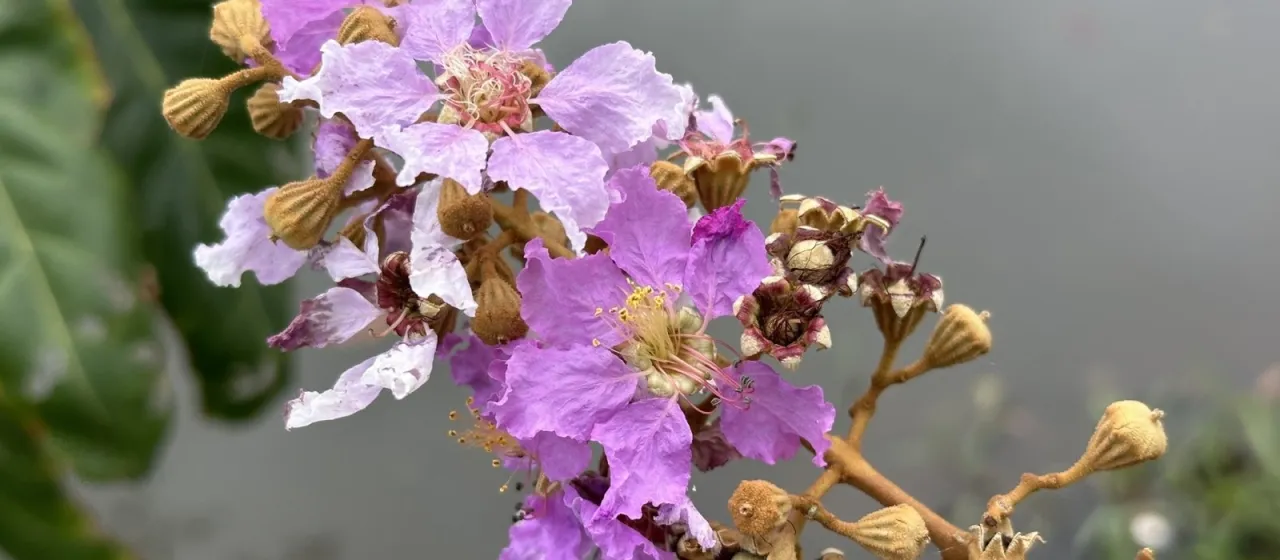
Lagerstroemia floribunda, often known as the Thai crape myrtle, is a spectacular ornamental tree within the Lythraceae family. This species is highly valued for its prolific flowering displays and its ability to act as a significant focal point in tropical and subtropical landscapes.
Originating from Southeast Asia, specifically regions like Thailand, Malaysia, and Myanmar, the tree thrives in warm, humid climates. It has a broad natural distribution across tropical environments, where it serves as a staple for both public botanical collections and private garden designs due to its architectural form.
Botanically, the plant is characterized by its smooth, exfoliating bark and dense, leathery foliage. The flowers appear in large, showy panicles, often transitioning through various shades of pink, lavender, and purple. It is a fast-growing species that benefits significantly from direct sunlight, which is essential for maximizing its blooming capacity.
Cultivation requires well-draining, nutrient-rich soil with a slightly acidic to neutral pH. Proper agrotechnical management involves consistent watering during the growing season and structural pruning to maintain the desired height and shape. Since the plant is sensitive to frost, its cultivation is restricted to frost-free zones or controlled greenhouse environments in colder regions.
The primary economic and practical use of this species is in landscape architecture and urban forestry. It is frequently planted in parks, along avenues, and in resort gardens to enhance aesthetic appeal. To maintain health, growers should monitor for the following common issues:
- Powdery mildew, especially during periods of high humidity.
- Aphids and scale insects that may congregate on fresh growth.
- Fungal root rot caused by stagnant water or inadequate soil drainage.