
Description
Northern dead-nettle (Lamium confertum) is an annual herbaceous plant belonging to the Lamiaceae family. Within agriculture, it is frequently identified as a weed that infiltrates arable land, particularly affecting winter grain fields, orchards, and gardens where it competes for soil moisture and nutrients from early spring.
The species is native to European regions, thriving in temperate climates. It is highly adapted to cool weather conditions, which allows it to emerge early in the season. Its geographic range covers various agricultural environments where it can colonize disturbed soil rapidly, taking advantage of open space left by crop rotation or fallow cycles.
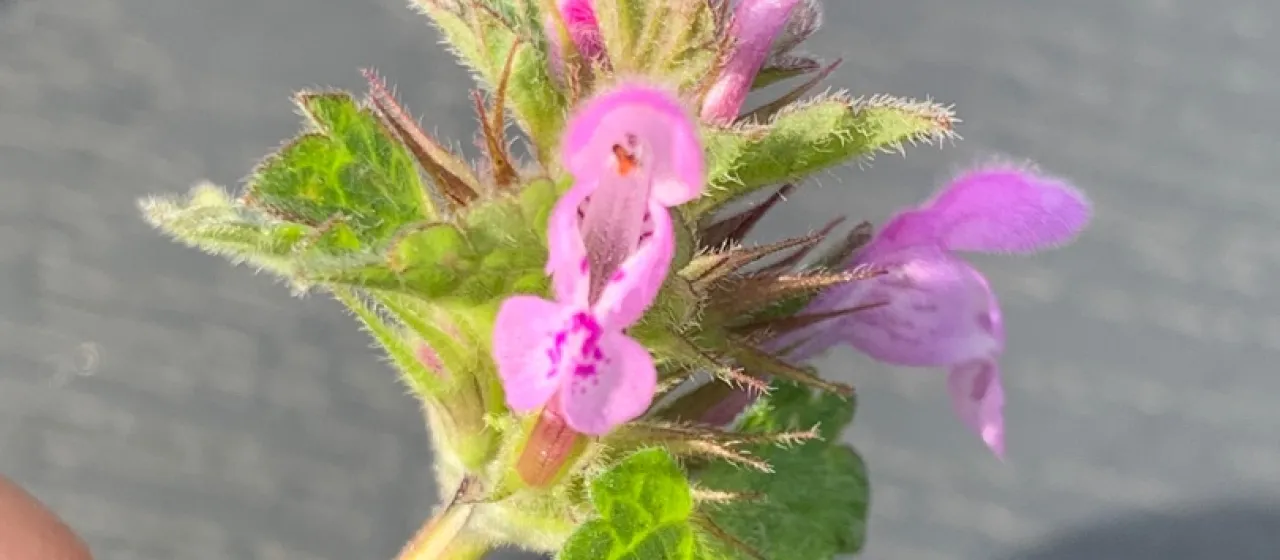
Botanically, it is characterized by a height of 10 to 25 centimeters and opposite leaves. Its distinguishing feature is the flower structure, where the blooms are tightly congested in axillary whorls near the top of the stem, often overshadowed by the upper leaves. This dense inflorescence structure is a key identification marker for the species in the field.
Soil requirements include moderate moisture levels and nitrogen-rich environments. Effective agrotechnical management involves deep mechanical cultivation before sowing to disrupt the root system and suppress emerging seedlings. Chemical control via targeted herbicides, applied when the plant is in the seedling or rosette stage, is usually the most effective method for population reduction.
Economically, while it acts as a competitor to commercial crops, it plays a role in local ecosystems as an early-season nectar source for pollinators. The plant is susceptible to common diseases like powdery mildew and can host various pests, including aphids and leaf-feeding insects, which are important to consider when evaluating integrated pest management programs.