
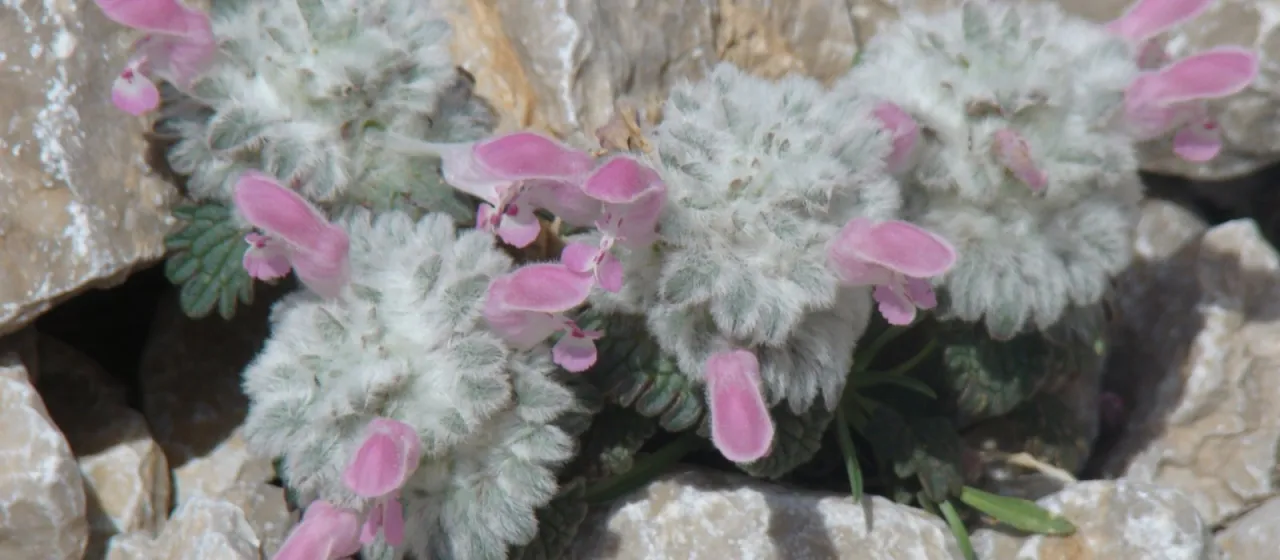
Description
The woolly-headed dead-nettle (Lamium eriocephalum) is a perennial herbaceous plant belonging to the Lamiaceae family. This species is recognized for its distinctive morphology and is primarily cultivated for specialized horticultural purposes, including rock gardens and alpine displays.
Native to the mountainous regions of Turkey, the plant is well-adapted to rocky and impoverished soil conditions. Its distribution is quite specific, reflecting its evolutionary preference for cooler, well-drained slopes, which gardeners attempt to replicate in modern cultivation environments.
Botanically, the plant is characterized by its silvery-white, dense trichomes that cover the stems and leaves, providing a woolly appearance. The flowers, which grow in dense whorls, are adapted to attract local pollinators. The plant typically grows in a low-spreading habit, making it an excellent groundcover for specific microclimates.
Cultivation requirements involve high light exposure and mineral-rich, calcareous, well-draining soils. Proper agronomic management includes limiting moisture during the dormant season to prevent root rot, as the plant is sensitive to waterlogged environments. Soil aeration is essential for maintaining plant vigor.
Typical plant health issues involve fungal infections if the planting site lacks proper airflow. While not prone to significant pest infestations, monitoring for aphids during the growing season is advised. The management strategy focuses on maintaining an open habitat to prevent the accumulation of humidity, which is the primary driver of disease in this species.