
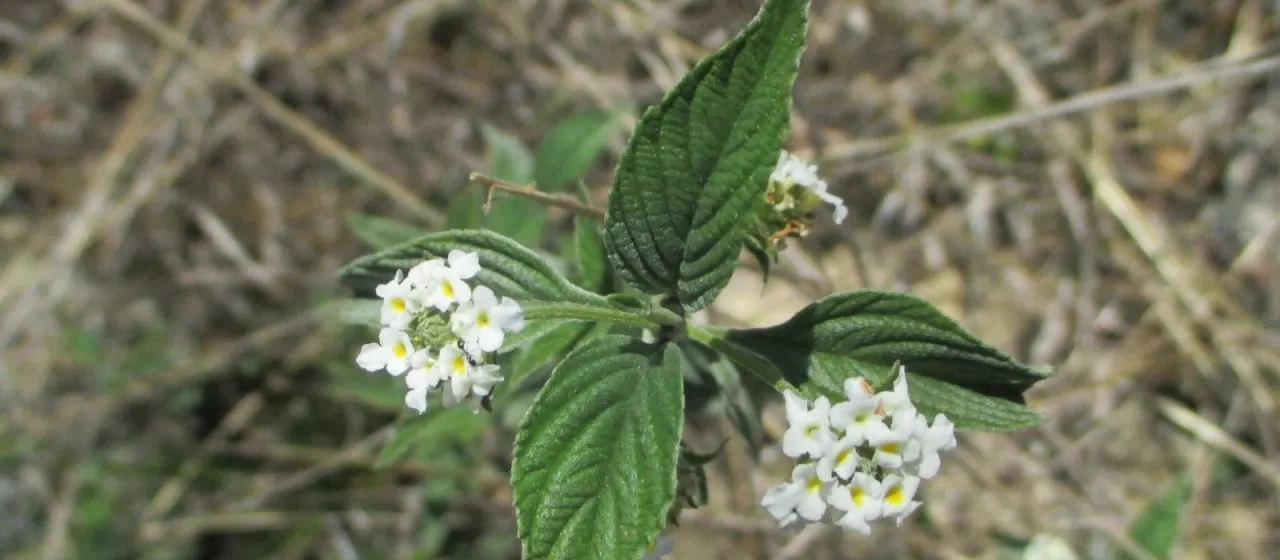
Description
Lantana canescens is a perennial shrub belonging to the Verbenaceae family. It is a woody plant known for its distinctive foliage and attractive inflorescences, often utilized in landscaping and restoration projects in regions that mimic its native tropical environment.
Originating from the American tropics, the plant is widely distributed across regions ranging from Mexico to South America. It typically thrives in open, sunny habitats and is well-adapted to environments that provide ample heat throughout the growing season, showing high resilience to typical tropical weather patterns.
Botanically, Lantana canescens is identified by its opposite, pubescent leaves which give it a grayish appearance. The flowers are arranged in small, dense clusters that frequently exhibit color changes during the blooming period, which is a common trait among many members of the genus Lantana.
Cultivation requires well-draining soil that is rich in organic matter. While the plant is drought-tolerant once established, supplemental irrigation is necessary during the early stages of development and during prolonged dry spells to ensure optimal growth. It is relatively easy to propagate through cuttings, which is the standard method used in commercial production.
The primary economic use of Lantana canescens is in the horticultural industry as a hardy, low-maintenance ornamental shrub. It is commonly planted for soil stabilization, as a decorative border plant, or in mixed shrub borders. Despite its hardiness, the plant can occasionally suffer from infestations of whiteflies or aphids, which can be managed with standard integrated pest management practices.
- Prefers full sun exposure for maximum floral production.
- Requires consistent pruning to maintain shape and density.
- Not frost-tolerant, requiring protection in cooler climates.
- Excellent for attracting pollinators to garden ecosystems.