
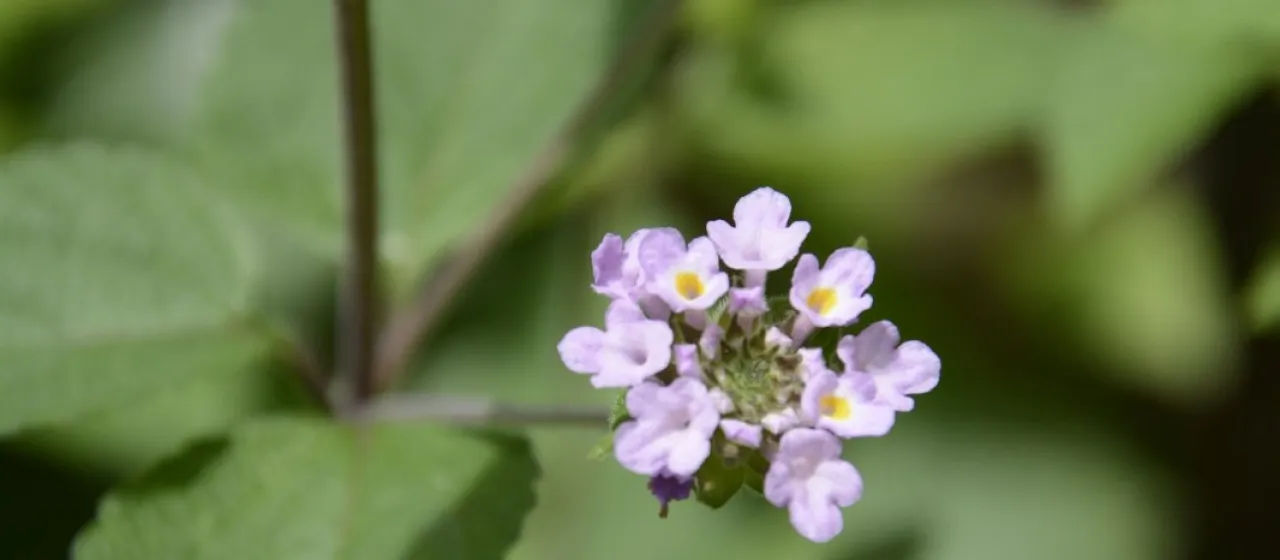
Description
Indian lantana (Lantana indica) is an evergreen perennial shrub belonging to the Verbenaceae family. This species is often distinguished by its woody stems and distinct floral architecture, which makes it a notable member of its genus within the tropical ecosystem.
The plant originates from the tropical regions of India and Southeast Asia. Its natural habitat includes diverse landscapes ranging from forest fringes to disturbed agricultural lands. Due to its hardiness, it has successfully established itself across various tropical and subtropical zones worldwide, where it thrives in open, sun-drenched locations.
Botanically, the plant features opposite leaves with serrated margins and a characteristic scent when crushed. The flowers are arranged in dense clusters, presenting a spectrum of colors that shift as the plant matures. This biological adaptation facilitates pollination by attracting various insects, including butterflies and bees, which are essential for its propagation.
Agricultural requirements for Lantana indica include well-drained, nutrient-poor to moderately fertile soil. It is highly drought-tolerant once established, although optimal growth is achieved through regular watering and full sun exposure. In managed landscapes, regular pruning is essential to prevent the plant from becoming leggy and to maintain its overall structural health.
While the plant has potential applications in traditional medicine and ornamental landscaping, it is managed primarily as a shrub in various garden settings. Growers should monitor for common pests, such as whiteflies and spider mites, which can thrive in hot, dry conditions. Proper sanitation and regular inspection are the primary methods for managing plant health and preventing the spread of fungal diseases.