
Description
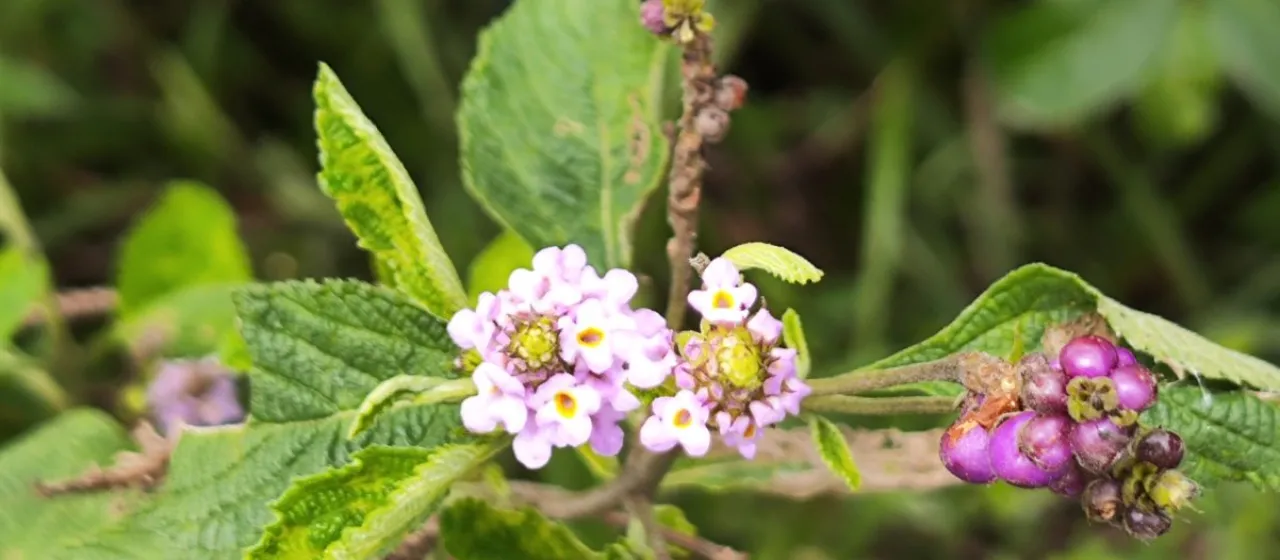
Lantana trifolia, commonly known as the three-leaf lantana, is a perennial evergreen shrub belonging to the Verbenaceae family. It is distinct among the genus for its unique phyllotaxy, where the leaves are arranged in whorls of three, giving the plant a structured and aesthetic appearance.
Native to tropical regions of Central and South America, this plant has adapted to various tropical and subtropical environments. While often treated as an ornamental crop in landscaping, its resilience in warm climates makes it a popular choice for borders, container gardening, and mass plantings. It is sensitive to frost and is typically cultivated as an annual in temperate regions.
Botanically, the plant features erect stems that can reach up to 1.5 meters in height. Its most striking features are the dense, head-like inflorescences that transition through shades of pink, purple, and lavender. Following the flowering phase, the plant produces clusters of small, fleshy berries which mature into a vivid, deep purple color, adding further ornamental value to the shrub.
To ensure optimal growth, Lantana trifolia requires well-draining, nutrient-rich soil with a slightly acidic to neutral pH. It thrives in full sun, requiring at least six hours of direct sunlight daily to produce abundant flowers. Agricultural practices for this plant involve consistent irrigation during the establishment phase and regular pruning to encourage bushy growth and maximize floral display.
- Preferred climate: Tropical/Subtropical.
- Soil requirements: Fertile, well-draining, moist.
- Sunlight needs: High (full sun).
- Maintenance: Pruning for shape and density.
The primary use of Lantana trifolia is horticultural, serving as a decorative plant in urban and private green spaces. In some regions, it is also utilized for its traditional medicinal properties, although its primary appeal remains its high aesthetic value and low maintenance requirements once established. Common challenges include infestations by whiteflies, aphids, and spider mites, as well as susceptibility to root rot in poorly drained, waterlogged soils.