
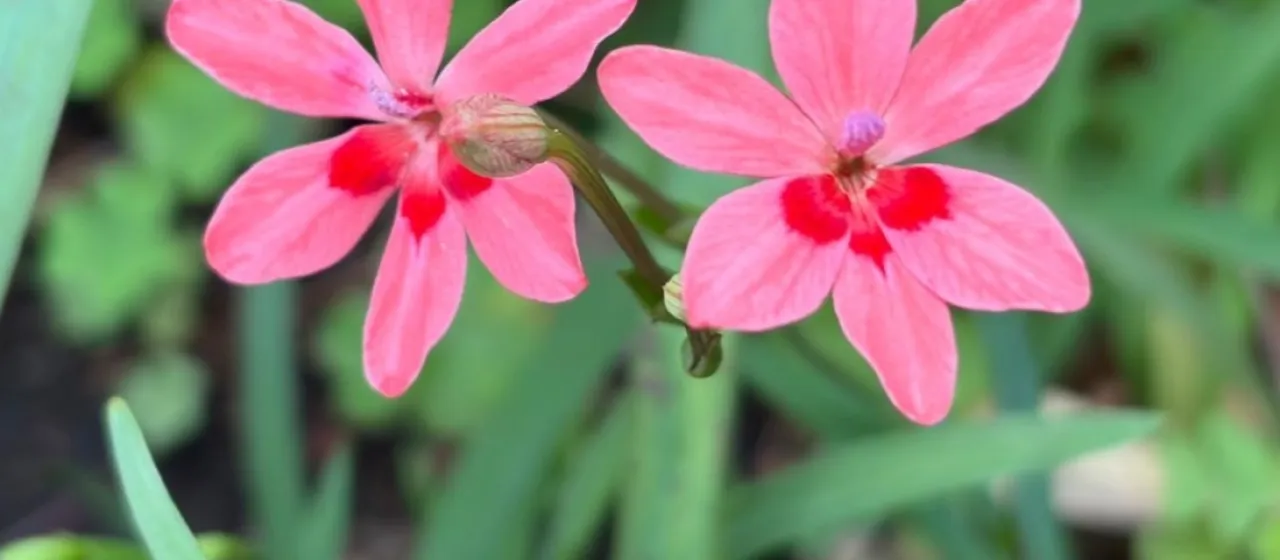
Description
Lapeirousia laxa is a perennial bulbous plant belonging to the Iridaceae family. Often recognized by its delicate spikes of star-shaped flowers, this plant is a popular choice for gardeners seeking to add a touch of African elegance to their floral displays.
Originating from Southern Africa, the species is naturally found in diverse habitats, including grasslands and coastal regions. Its evolutionary history has made it well-adapted to seasonal cycles, requiring specific environmental cues to trigger its bloom during the growing season.
Botanically, Lapeirousia laxa features slender, lance-shaped foliage and corms (bulbs) protected by fibrous tunics. The inflorescence is a loose, one-sided spike where small, vibrant flowers bloom sequentially. These flowers are typically red or pink, often with contrasting markings in the throat.
- Requires well-draining, sandy loam soil to prevent rot.
- Thrives in full sun to partial shade conditions.
- Needs a distinct dry dormant period after the foliage dies back.
Cultivation practices focus heavily on moisture management, as the corms are prone to rot in waterlogged conditions. While generally hardy, they are not frost-tolerant and must be lifted in colder climates before the first ground freeze. Regular monitoring for pests is essential to maintain plant health.
The primary use of Lapeirousia laxa is in ornamental horticulture. It is frequently employed in rock gardens, borders, and pots. Common phytosanitary challenges include root rot caused by poor drainage and infestations by spider mites or thrips, which can reduce the vigor of the plant if not controlled.