
Description
Lappula deflexa, commonly known as nodding stickseed, is an annual herbaceous plant belonging to the Boraginaceae family. In agricultural settings, it is primarily recognized as a weed species that can invade cultivated lands, pastures, and rangelands, potentially impacting crop yields and animal husbandry quality.
The native range of this species spans across the temperate regions of Eurasia and North America. It is typically found in habitats such as disturbed dry soils, rocky slopes, road verges, and forest margins. Its ability to thrive in diverse environments makes it a resilient plant that colonizes open spaces rapidly.
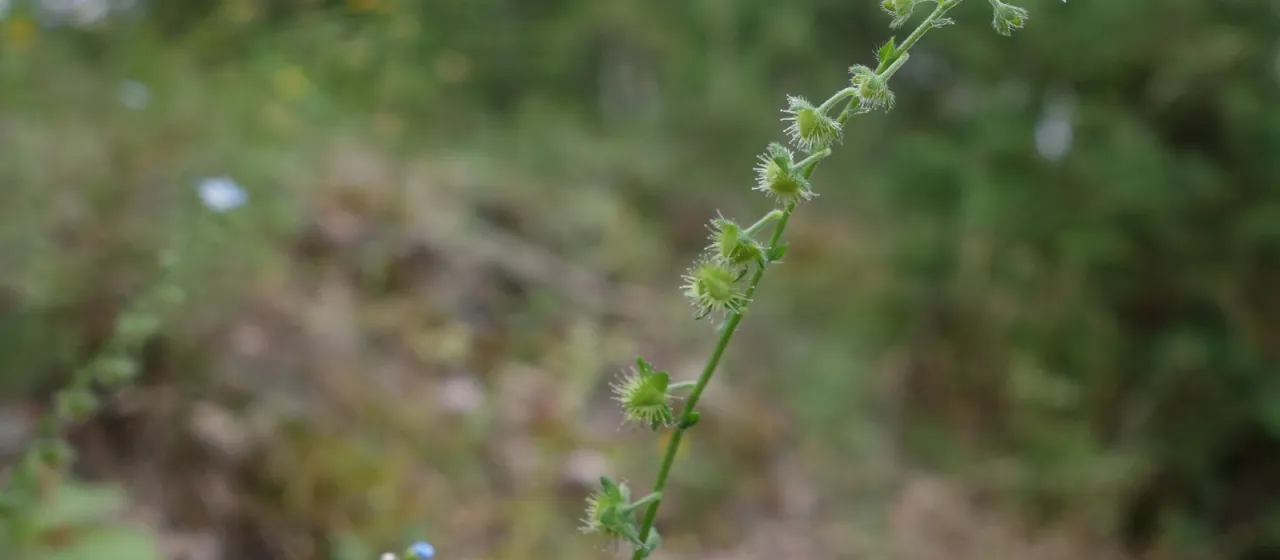
Botanically, the plant is characterized by its erect, branching stems and lanceolate leaves covered with stiff hairs. Its distinctive feature is the fruit, which consists of four nutlets covered with barbed prickles. These hooks are highly effective for seed dispersal, allowing the plant to spread through the fur of animals and human activity.
The plant demonstrates high tolerance to cold climates and drought conditions, which are common in its native range. It prefers well-drained, sandy, or rocky soils, although it can adapt to various soil types if competition from other vegetation is low. In terms of agronomy, field management involves mechanical weeding and rotation strategies to minimize the presence of this seed-dispersing weed.
The main economic concern regarding Lappula deflexa is its negative impact on wool quality in livestock farming, as the burs become entangled in the fleece of sheep, causing significant damage. While not typically viewed as a beneficial crop, the plant serves as a food source for some insect pollinators and contributes to the biodiversity of natural, non-cultivated environments.