
Description
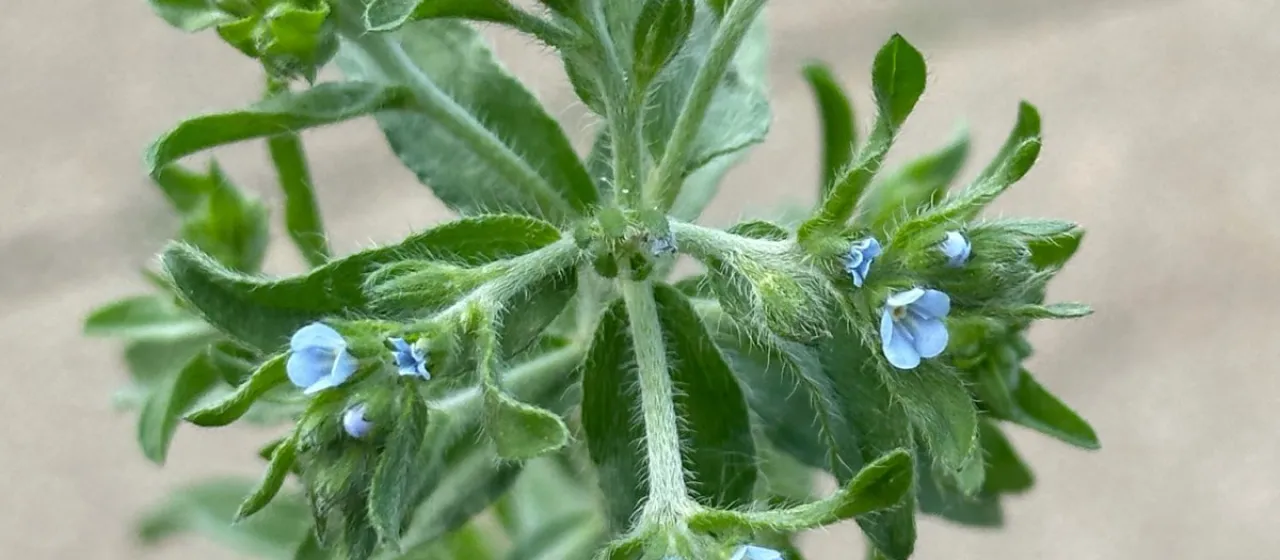
European stickseed (Lappula squarrosa) is an annual herbaceous plant belonging to the Boraginaceae family. In agriculture, this species is classified as a significant weed, often infesting cereal crops, pastures, and fallow lands. It is widely recognized for its small, prickly nutlets covered with hooked barbs, which easily attach to the fur of animals, clothing, and agricultural machinery, aiding in the rapid dispersal of the plant.
The native range of the species covers temperate regions across Eurasia, though it has since spread to other continents as an introduced species. European stickseed is highly adaptable and thrives in disturbed environments, particularly in dry, sandy, or stony soils. Its ability to tolerate low-fertility soils and harsh conditions makes it a common colonizer of waste areas, road verges, and poorly managed farmland.
Botanically, the plant features a branched, erect stem that typically reaches 20–50 cm in height, covered in stiff, greyish hairs. The leaves are linear-lanceolate, and the small, blue or violet flowers are arranged in terminal racemes. The root system is a slender taproot, which allows the plant to extract moisture from deeper soil layers during dry spells, effectively competing with crop plants for water and nutrients.
The agricultural significance of European stickseed is overwhelmingly negative. Beyond competing for resources with primary crops, the plant poses a specific threat to the livestock industry. The hooked seeds become deeply embedded in sheep wool, leading to significant contamination that lowers the market value and quality of wool. Furthermore, in dense infestations, the weed can reduce the overall yield of cereals and legumes.
Management and control of the plant require a multi-faceted approach. Preventive measures include the regular cultivation of fallow fields and the destruction of weed patches before the plants set seed. Chemical control with selective herbicides is effective when applied at the rosette or early flowering stages. Crop rotation remains an essential practice, as it disrupts the growth cycle of the weed and allows for more targeted mechanical interventions.