
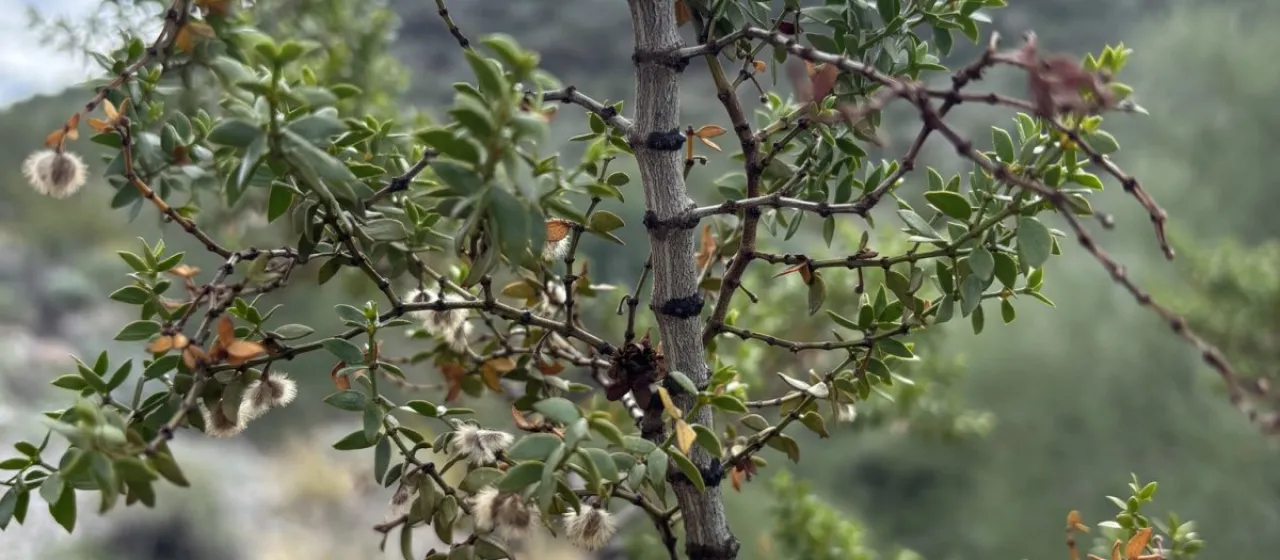
Description
The creosote bush (Larrea tridentata) is a long-lived, evergreen shrub belonging to the Zygophyllaceae family. It is a dominant species in the arid regions of North America, particularly the Mojave, Sonoran, and Chihuahuan deserts. The plant is renowned for its remarkable ability to thrive in environments where most other vegetation fails to survive.
Botanically, the creosote bush is characterized by its small, resinous, dark green leaves that emit a distinct, pungent aroma, especially following rain. The plant is exceptionally drought-tolerant and can survive for millennia, with some individuals forming clonal rings that have been dated back thousands of years, making them among the oldest organisms on Earth.
Regarding climate and soil requirements, this shrub thrives in well-drained, rocky, or sandy alkaline soils. It is perfectly adapted to desert conditions, requiring minimal water and abundant sunlight. In terms of cultivation, it is important to note that the creosote bush is a slow-growing species, and successfully establishing it in a nursery or garden setting requires patience and minimal intervention in terms of irrigation.
The economic and practical utility of the creosote bush is centered on its phytochemical profile. It contains nordihydroguaiaretic acid (NDGA), a potent antioxidant used in the food industry as a preservative and in medicine for its anti-inflammatory and antiseptic properties. Historically, it has been used by indigenous populations for a wide array of medicinal purposes, ranging from wound care to internal ailments.
- Extreme drought and salinity tolerance.
- High photosynthetic efficiency under low water availability.
- Natural resistance to typical agricultural pests.
- Long lifespan and low maintenance requirements.
In terms of pathology, the creosote bush is remarkably resistant to diseases, owing to its dense concentration of phenolic compounds and resins which act as natural defense mechanisms against fungi and bacteria. While certain desert insects feed on its leaves, the plant rarely faces significant pest pressure, making it a robust candidate for sustainable dryland landscaping and specific agro-pharmaceutical applications.