
Description
Lasimorpha senegalensis is a perennial herbaceous plant belonging to the Araceae family. While often studied in botanical contexts, it serves as a traditional food resource in various regions of Africa. Its ability to thrive in extreme moisture conditions makes it an interesting subject for tropical agricultural research and food security programs.
The origin of this species is linked to the tropical belt of West and Central Africa. It naturally inhabits swampy terrains, riverbanks, and floodplains where high humidity is constant. The climate requirements are strictly tropical, demanding high average annual temperatures and high precipitation levels throughout the year to support its rapid vegetative growth.
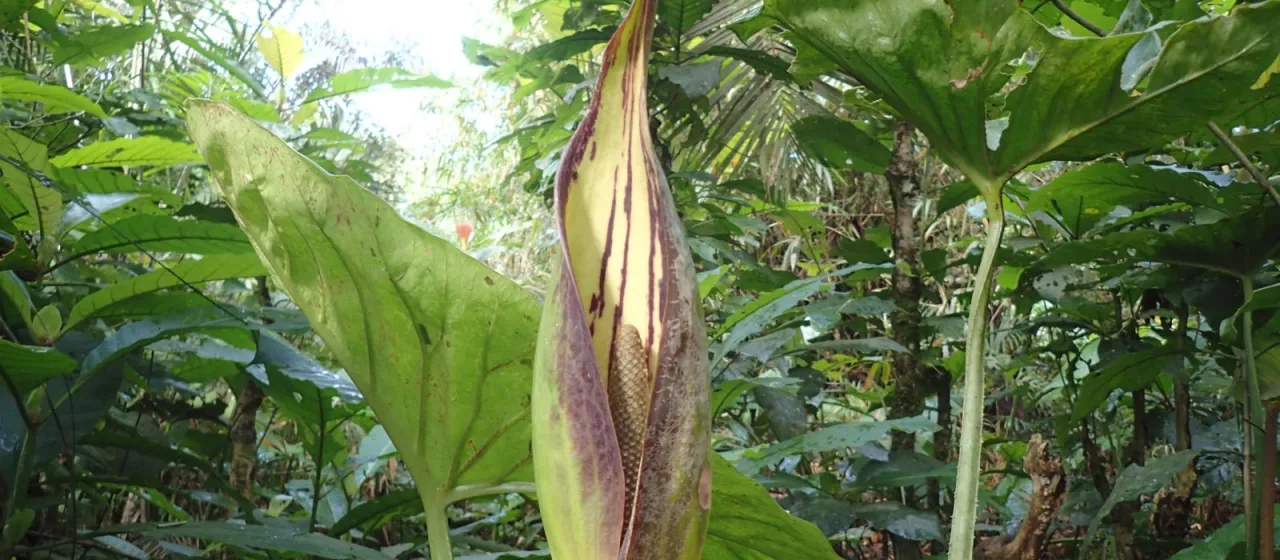
From a botanical standpoint, the plant is characterized by its large, arrowhead-shaped foliage and the typical aroid inflorescence consisting of a spadix sheltered by a spathe. Its underground storage organs, or rhizomes, are highly developed, allowing the plant to persist in nutrient-rich but water-saturated soils. This adaptation is a key feature that distinguishes it from dry-land agricultural staples.
Agricultural practices for Lasimorpha senegalensis focus on maintaining a wetland or semi-aquatic environment. Soil types should be rich in organic matter, such as silty clays, which retain moisture effectively. Propagation is typically achieved through vegetative division of the rhizomes, ensuring rapid establishment in suitable wet conditions. Fertilization is rarely needed in nutrient-rich swamp ecosystems, though managed plots may benefit from supplemental organic input.
Economically, the plant is valued for its starchy rhizomes and young leaves, which are used in local cuisine. Proper processing is essential to eliminate calcium oxalate crystals, which can cause irritation. Regarding pests and diseases, the plant is generally robust, though it can suffer from rot-inducing fungi in stagnant water and occasional attacks from aphids or beetles that target the foliage during the dry season.