
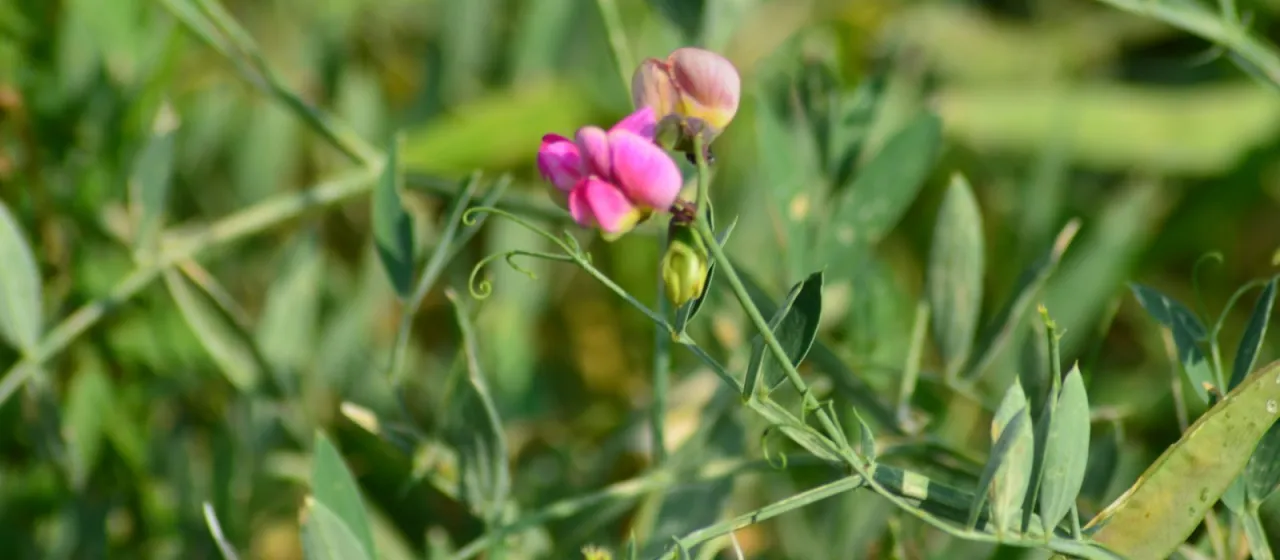
Description
Lathyrus cirrhosus is a herbaceous perennial plant belonging to the Fabaceae family. As a leguminous crop, it is recognized for its ecological resilience and its significant role in nitrogen fixation within the soil, contributing to improved soil fertility in managed agricultural systems.
The native range of this species is primarily centered in the warm regions of Southern Europe and the Mediterranean basin. It is well-adapted to Mediterranean climates, thriving in areas characterized by seasonal rainfall patterns and ample sunlight. Its natural distribution demonstrates an ability to colonize diverse landscapes, from open hillsides to woodland margins.
Botanically, the species is distinguished by its compound leaves that terminate in tendrils, enabling it to climb and optimize light absorption. The structure of the plant allows it to form a dense canopy, which can effectively suppress weed growth. The root system is deep and efficient at sourcing water, which enhances the plant's survival during periods of limited moisture.
Agricultural success with this crop relies on choosing well-drained, neutral-to-alkaline soil types. Proper site preparation, including deep plowing and moderate fertilization, is recommended to ensure robust establishment. While the plant is drought-tolerant, optimal yields are achieved when consistent moisture is available during the active vegetative growth phase in early spring.
In terms of хозяйственное usage, it is cultivated primarily as a high-protein forage resource for livestock. It can be harvested for hay or used as part of a grazing rotation system. Common pathogens include various leaf spot fungi and root rots, particularly in poorly drained soils. Integrated pest management, including regular crop rotation and the selection of disease-resistant varieties, remains the standard approach for ensuring yield stability.