
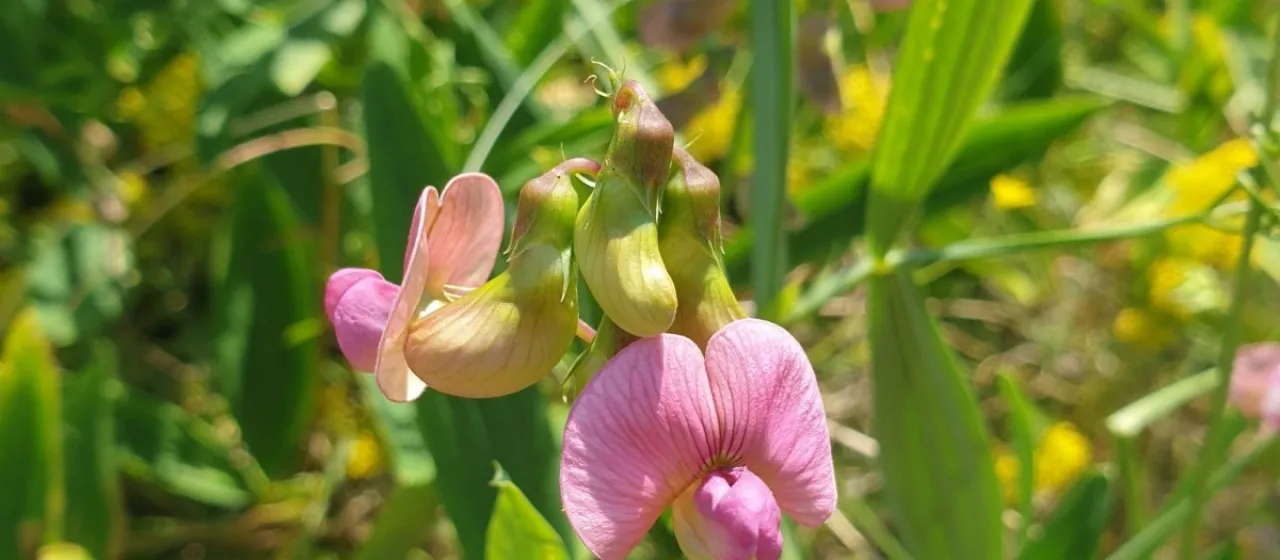
Description
The perennial peavine (Lathyrus heterophyllus) is a robust herbaceous plant belonging to the Fabaceae family. Known for its climbing growth habit, it can reach significant lengths, often utilizing other vegetation or structures for support in its natural habitat and cultivated plots.
Originating from Europe and parts of Western Asia, this species is well-adapted to various temperate climate zones. It thrives in diverse environments, ranging from forest edges to open meadows, showcasing a high level of resilience against fluctuating weather conditions and differing sunlight levels.
Botanically, the plant is characterized by its distinct pinnate leaves ending in tendrils and large, striking magenta or purple flowers. The root system is deep and well-developed, contributing to the plant's stability and its efficacy in soil nitrogen fixation through symbiotic relationships with specific bacteria.
For successful cultivation, perennial peavine requires well-drained, fertile soil, though it is notably tolerant of various soil types including clay and loam. Adequate weed management during the seedling stage is critical, as the plant establishes itself slowly, requiring protection until the root system is fully mature.
In agricultural practice, this legume is primarily valued as a forage crop. It provides high-quality biomass rich in protein for livestock. Furthermore, its role as a green manure or cover crop is significant, as it helps prevent soil erosion, improves soil structure, and reduces the need for synthetic nitrogen fertilizers.
- Excellent protein source for forage
- Enhanced soil nitrogen levels
- Good drought tolerance once established
- Effective cover crop for erosion control
Common agricultural threats include fungal diseases like powdery mildew and various leaf spot pathogens, which typically emerge in humid conditions. Pests such as weevils and aphids may cause damage to the foliage; therefore, early monitoring and maintaining good agricultural hygiene are essential for healthy yields.