
Description
Jerusalem vetch (Lathyrus hierosolymitanus) is a member of the Fabaceae family, commonly known as the pea family. As a wild legume species, it displays typical characteristics of the Lathyrus genus, including specialized tendrils for climbing and a symbiotic relationship with nitrogen-fixing bacteria, which enriches the soil where it grows.
The native range of this species is centered in the Eastern Mediterranean, particularly in Israel and adjacent regions. It has evolved to thrive in a Mediterranean climate, characterized by cool, wet winters and hot, dry summers. This environmental adaptation makes it a resilient plant in its natural habitat, capable of surviving seasonal variations that would be challenging for less adapted species.
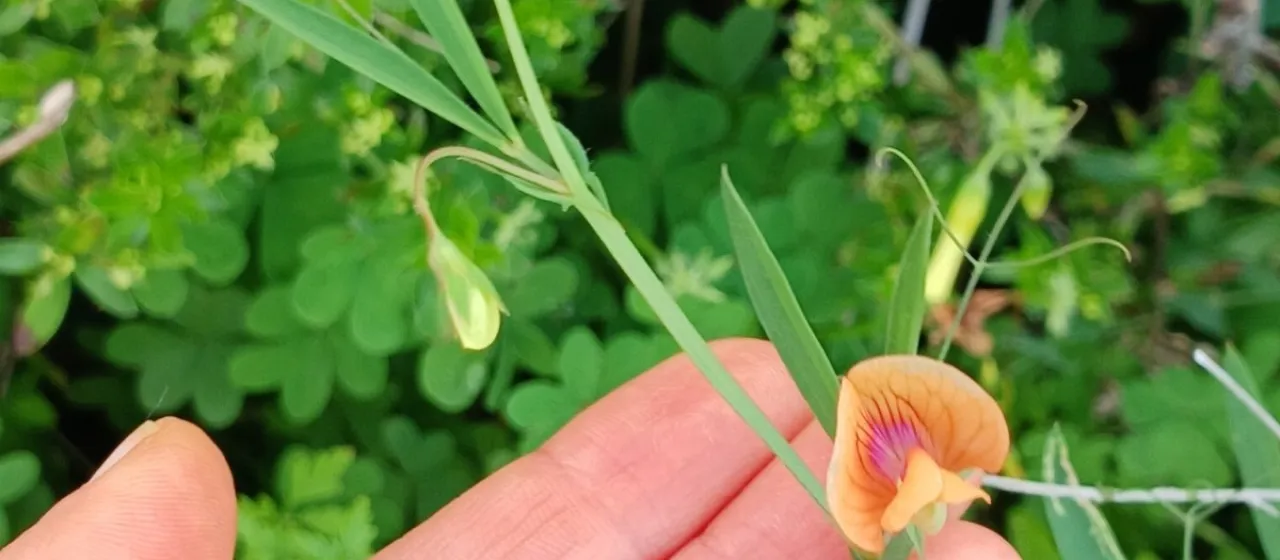
Botanically, Lathyrus hierosolymitanus is distinguished by its pinnate leaves and prominent, brightly colored flowers that attract a variety of pollinators. The plant's structure allows it to climb over other vegetation, utilizing its tendrils to reach sunlight. Its root system is deep and efficient, enabling the plant to access moisture in rocky or sandy substrates common in its native geography.
In terms of agricultural and ecological requirements, Jerusalem vetch prefers well-drained soils and full sun exposure. It does not tolerate waterlogging, as excessive moisture can lead to root diseases. For successful cultivation or management, ensuring soil aeration and managing potential fungal pathogens during humid periods is essential. It is generally resistant to moderate drought stress once established.
The agricultural and economic utility of this species focuses on its role as a potential source of forage and its value in ecological restoration. By fixing nitrogen in the soil, it acts as a natural soil improver. It is also an important nectar source for local bee populations, making it valuable for biodiversity conservation in agricultural landscapes.
- Scientific classification: Fabaceae family.
- Adaptation: Mediterranean climate specialist.
- Ecological role: Nitrogen fixation in soil.
- Growth habit: Climbing herbaceous plant.