
Description
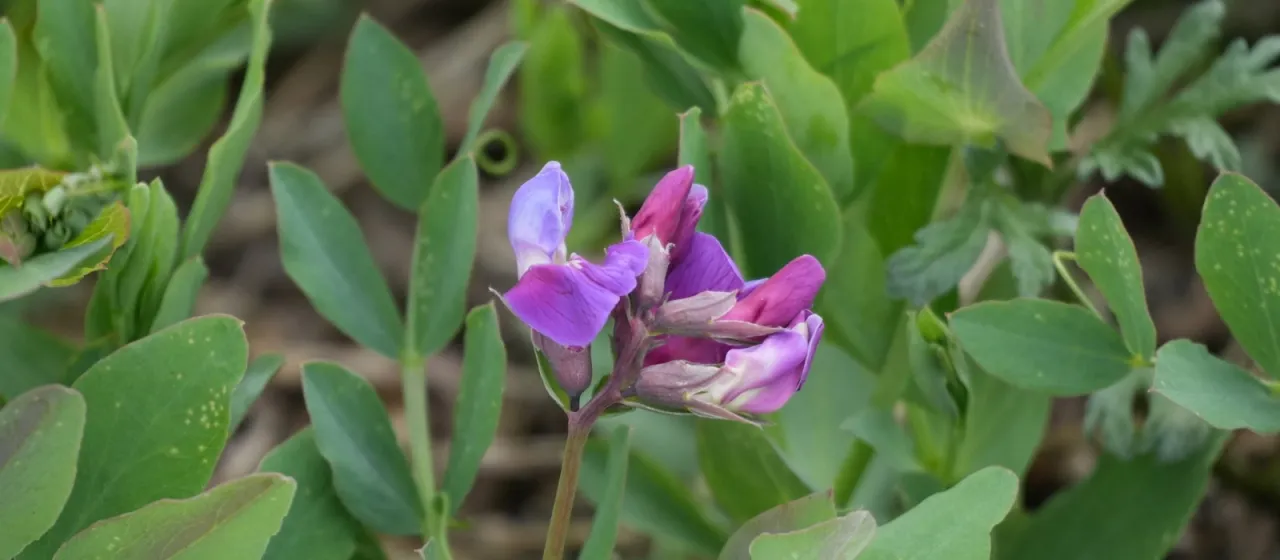
Sea pea (Lathyrus japonicus) is a perennial herb belonging to the Fabaceae family. This species is well-known for its prostrate or climbing habit, often found growing in harsh environments such as coastal shingle and sand dunes. It is characterized by its glaucous foliage and vibrant purple-to-blue flowers that appear throughout the summer months.
The native distribution of this plant includes the coastal regions of the Northern Hemisphere, spanning from Europe and Asia to North America. It is highly adapted to temperate and subarctic climates, demonstrating exceptional resilience to saline environments and strong winds, which are typical of its natural coastal habitat.
Botanically, the plant features pinnate leaves ending in tendrils, which allow it to anchor itself to surrounding vegetation or substrates. Its root system is deep and rhizomatous, providing stability in shifting sands. The fruit is a legume pod, typically containing several seeds that are adapted for dispersal by water, allowing it to colonize new maritime areas effectively.
Agricultural requirements for sea pea focus on well-draining, sandy, or gravelly soils with a neutral pH. It is a nitrogen-fixing plant, which reduces the need for synthetic nitrogen fertilizers in low-intensity cultivation systems. The plant exhibits high cold hardiness and is capable of surviving freezing temperatures, making it a robust perennial choice for coastal reclamation projects.
While the plant has historical use as a forage resource, it must be managed carefully due to the potential presence of anti-nutritional factors common in wild legumes. Typical pests include aphids and weevils, while fungal issues such as powdery mildew can occur in overly stagnant or humid conditions. Proper field management involves regular monitoring and ensuring adequate airflow between plants.
- Excellent tolerance to saline soil conditions.
- Natural nitrogen fixation capability.
- High potential for coastal erosion control.