
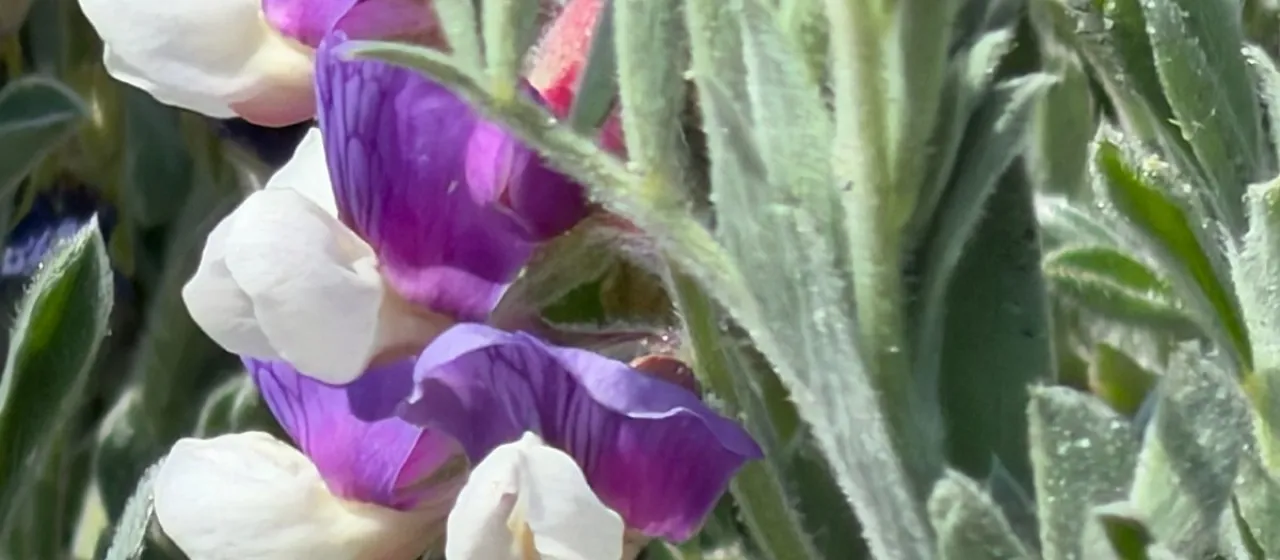
Description
The grey beach pea (Lathyrus littoralis) is a perennial herbaceous plant belonging to the Fabaceae family. This species is highly adapted to the harsh environment of coastal dunes, distinguishing itself from standard agricultural legumes by its remarkable resilience to shifting sands and salt spray.
The native range of this plant encompasses the Pacific coast of North America. It thrives in open, sandy habitats along the coastline, playing a crucial ecological role as a pioneer species that helps stabilize unstable dune systems against wind erosion.
Botanically, the plant is characterized by its densely pubescent leaves and stems, which serve as an adaptation to reduce water loss and prevent damage from abrasive sand particles. Its root system is extensive and deep, allowing the plant to anchor itself firmly in the shifting substrate.
Climate and soil requirements are strictly tied to sandy, well-drained, and nutrient-poor environments with full sun exposure. In terms of cultivation, it does not require fertilizers common for traditional crops, as it relies on its symbiotic relationship with nitrogen-fixing bacteria to survive in barren sand.
Agricultural and landscape use is primarily focused on environmental conservation, specifically sand dune restoration and beach erosion control. While not a conventional food crop, it serves as a valuable genetic resource for breeding programs aiming to develop salt-tolerant and drought-resistant legumes.
- Excellent tolerance to saline conditions.
- Critical role in dune stabilization.
- Biological nitrogen fixation in sandy soils.
- High adaptation to extreme solar radiation.
The plant is susceptible to specific fungal diseases that thrive in high humidity and is occasionally targeted by generalist legume pests. Proper management involves avoiding excessive moisture and ensuring the natural sandy integrity of the site is maintained to prevent competition from invasive species.