
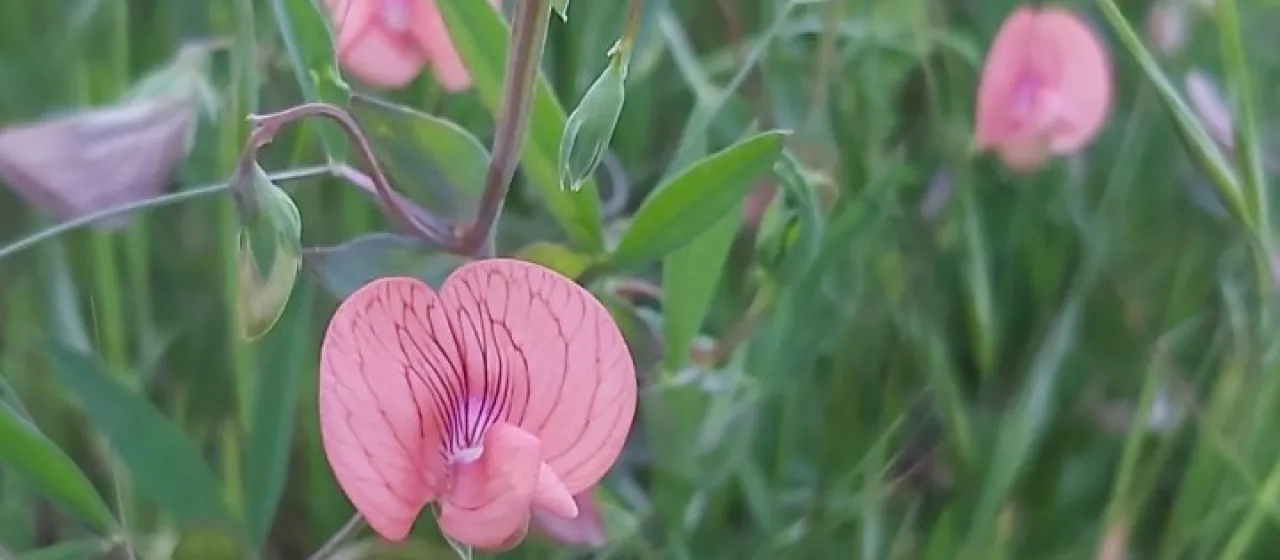
Description
The marbled vetchling (Lathyrus marmoratus) is an annual herbaceous plant belonging to the Fabaceae (legume) family. This crop is highly regarded in sustainable agriculture for its nitrogen-fixing capabilities and its ability to provide high-quality forage for livestock, serving as a reliable alternative to traditional fodder crops.
Originally native to Mediterranean and Middle Eastern regions, the species has evolved to thrive in environments with varying precipitation levels. Its natural distribution is characterized by areas with high solar exposure, which makes it well-adapted to open-field cultivation in various temperate zones where drought stress may occur during the growing season.
Botanically, Lathyrus marmoratus features a climbing stem equipped with tendrils that allow it to utilize structural support. The leaves are pinnate, typically ending in a branched tendril, and the flowers are notable for their distinct marbled coloration. The root system is deep and tap-rooted, which contributes to the plant's resilience in soils with fluctuating moisture levels.
Agronomic requirements for this crop include well-draining soils with a neutral pH level. It performs optimally in loamy soils that facilitate deep root penetration. Cultivation practices should focus on early spring sowing to ensure the plant establishes a robust root system before the onset of intense heat. Proper spacing is essential to reduce humidity-related issues within the crop canopy.
Key хозяйственное uses include:
- Production of protein-rich hay and green fodder for cattle and sheep.
- Use as a green manure crop to increase soil nitrogen levels.
- Integration into cover crop systems to protect soil from erosion.
Disease management is critical for Lathyrus marmoratus, with root rot and powdery mildew being the most common threats. Pests like aphids and pea weevils can significantly reduce yields if left unmanaged. Implementing an integrated pest management (IPM) strategy that includes crop rotation and the use of resistant seed varieties is highly recommended for commercial production.