
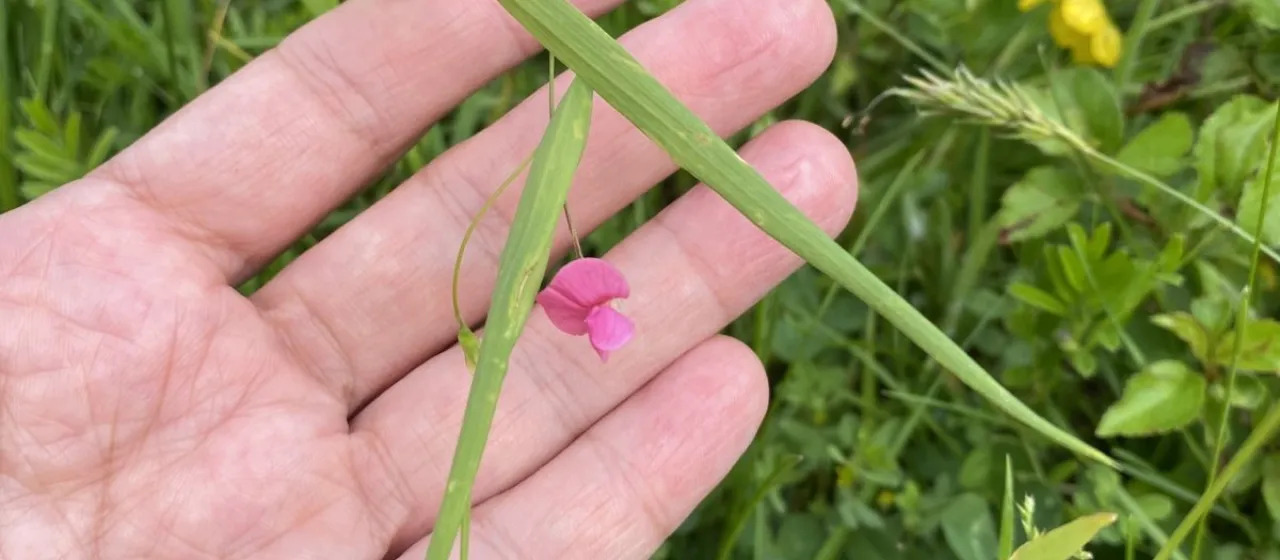
Description
The grass vetchling (Lathyrus nissolia) is an annual herb belonging to the Fabaceae family. It is distinct among legumes for its unique foliar adaptation: its true leaves are reduced to linear, grass-like flattened petioles. This morphological trait makes the plant visually indistinguishable from grasses until it enters the flowering stage.
Native to Europe, the Caucasus, and Southwest Asia, the plant thrives in temperate climates. While it is rarely grown as a major commercial crop, it is of interest in sustainable agricultural projects due to its nitrogen-fixing capabilities and its role in maintaining ecological balance in meadows and forage areas.
Botanically, the species is characterized by a slender stem and vibrant pinkish-purple flowers. It prefers well-drained, nutrient-moderate soils and can survive in a variety of light conditions, though it performs best in full sun. The plant's ability to fix atmospheric nitrogen makes it a beneficial component when integrated into diverse pasture ecosystems.
Agricultural management requires careful attention to weed control during the seedling stage, as the plant is not a strong competitor when young. Cultivation involves preparing a firm seedbed and sowing during early spring. No specialized fertilization is typically required, as the plant is adapted to natural soil fertility levels, though moisture management is essential during germination.
Host-specific pests and diseases for this species include common legume pathogens such as powdery mildew and rust, along with various aphids and pea weevils. Implementing proper crop rotation and monitoring plant health during the growing season is crucial. хозяйственного use of this plant is mostly limited to niche fodder applications and biodiversity improvement.