
Description
Launaea cervicornis is a perennial herb belonging to the Asteraceae family. Within the agricultural sector, this species is noted for its ability to thrive in arid and semi-arid environments, utilizing succulent-like adaptations to manage water scarcity in coastal and rocky ecosystems.
The plant originates from the Balearic Islands, where it occupies highly specific niches. Its natural distribution is limited to habitats with thin, limestone-rich soils, high salt concentrations, and intense sunlight, making it a specialized crop rather than a general-purpose agricultural commodity.
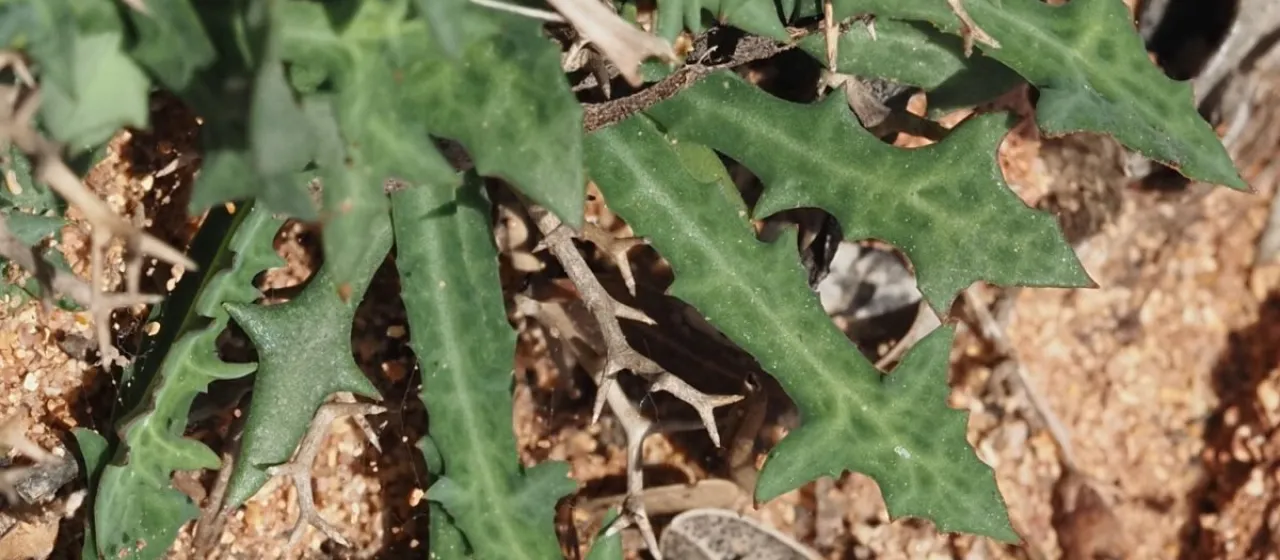
Botanically, the plant is characterized by a dense, woody, and highly branched structure. Its stems are distinctly rigid and horn-like, which serves as a defense mechanism against herbivory and high wind speeds. The yellow florets are small and clustered, typical of the Lactuceae tribe within the Asteraceae family.
Agronomic management of this crop requires precise conditions, primarily focusing on extreme drainage. Cultivators must ensure that the growing medium mimics the rocky substrate of its native range. Fertilizer application should be minimal, as the plant is adapted to nutrient-poor soils and can be easily damaged by over-fertilization.
In terms of economic utility, Launaea cervicornis is primarily managed for conservation purposes and as a niche ornamental crop for xeriscaping. Ongoing research into its secondary metabolites suggests potential future applications in pharmaceutical formulations, though large-scale commercial farming is not yet established.
Pest and disease management involves monitoring for typical greenhouse invaders such as spider mites, especially when cultivated in controlled environments. Root rot remains the most common threat, usually triggered by poor drainage or excessive humidity levels during the cooler seasons.